
As the United States prepares to host the 2028 Summer Olympics in Los Angeles, attention is naturally turning toward medal predictions and elite athletes. Yet one of the greatest challenges facing American sport begins long before athletes ever reach an Olympic training center. It starts with the steady decline of grassroots participation.
Youth sports participation has fallen significantly over the past two decades. The percentage of children between six and 12 who play organized sports dropped from 45% to 37% over a ten-year period, while many teenagers leave organized athletics during the years when they are beginning to reach their competitive potential. For Olympic sports that rely almost entirely on community clubs rather than professional leagues, those trends raise important questions about the future of America’s talent pipeline.
Grassroots organizations across the country are facing rising operating costs, shrinking volunteer bases, and increasing difficulty securing access to training facilities. Olympic disciplines without strong commercial support often feel those pressures most acutely. If those community programs continue to disappear, the long-term impact may eventually become visible on the Olympic podium.
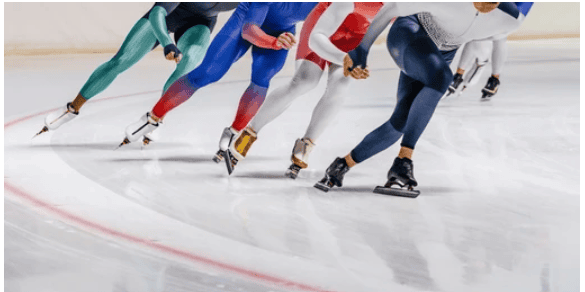
Few people understand that challenge better than Ron Halcrow, founder of the Santa Clarita Speed Skating Club. During more than two decades of coaching and program development, Halcrow has helped produce Olympians and national champions. His concern, however, extends well beyond speed skating.
He believes America’s Olympic success has become increasingly dependent on isolated programs rather than a broad network of thriving local clubs.
“Without the grassroots, you’re not going to have Olympians,” Halcrow says. “They aren’t going to start at the Olympic facilities. They’re going to start at a grassroots organization.”
He remembers a time when Southern California supported numerous speed skating clubs that regularly competed against one another, creating strong community connections while introducing young athletes to the sport. Those clubs were powered by volunteers, affordable access to ice, and an environment where recreational participation naturally evolved into elite competition for a select few.
Over time, that landscape changed dramatically.
As hockey expanded and became more commercially successful, ice rinks increasingly prioritized activities that generated predictable revenue. Speed skating, which lacks major television contracts and professional leagues, found itself competing for fewer training opportunities. At the same time, updated international safety standards made many older facilities unsuitable for competitive speed skating.
According to Halcrow, access has become one of the greatest obstacles facing the sport.
“We have rinks, but it’s very difficult for us to get into the rinks to train,” he explains. “We’re tenants in these rinks. We’re not the owners.”
Volunteer recruitment presents another growing challenge.
Grassroots clubs have traditionally relied on parents who volunteer while their children participate. Once those families move on, clubs must recruit and train an entirely new generation of volunteers, creating an ongoing cycle that is difficult to sustain.
“It becomes a revolving door,” Halcrow says. “You’ll end up with a volunteer who will be with the program for maybe no more than four years. Then they leave, and you have to retrain a whole new group.”
Finding qualified coaches is equally difficult. Unlike professional sports, Olympic disciplines such as speed skating rarely provide stable career opportunities. Many experienced athletes and coaches eventually leave the sport to pursue more sustainable professions, while those who remain often volunteer simply because they are passionate about preserving the sport.
Halcrow believes many people misunderstand how Olympic development actually works.
“I think the misperception is that people believe the sport is structured like hockey,” he says. “We can’t do that at the grassroots level simply because of cost, the lack of volunteers, and no professional level.”
Although his experience comes from speed skating, Halcrow argues that the same issues affect many Olympic sports throughout the United States. The country will likely continue producing exceptional athletes, but increasingly from only a handful of regions with specialized facilities and unusually strong local support.
“We’ll still have Olympians,” he says. “We’ll just never have depth.”
Rather than relying indefinitely on volunteers, Halcrow believes local governments, schools, philanthropists, and private organizations should recognize grassroots sports as long-term community investments. Dedicated facilities, stronger partnerships, and sustained local support would provide stability for clubs while expanding opportunities for young athletes to participate.
He points to countries such as South Korea, where municipalities actively invest in skating infrastructure and community clubs. While he is not advocating for America to replicate another country’s system, he believes the broader principle deserves attention. Olympic success is built through sustained investment at the community level, years before athletes ever represent their nation.
Every Olympic Games showcases performances measured in fractions of a second and centimeters. Those moments capture global attention, but they are only the final chapter of stories that begin much earlier in neighborhood clubs run by volunteers, where children first discover a sport that may shape their future.
If those grassroots programs continue to disappear, the United States may still produce remarkable Olympians. But without rebuilding the foundation beneath them, the pool of future champions will continue to shrink, placing the nation’s long-term Olympic success at risk.
