

Loss has a way of rearranging a life before a person has had time to understand what has happened. For Laila France, the sudden death of her husband, James, brought grief into a household already carrying the responsibilities of raising a child and managing a life they had built together. Almost immediately, she found herself confronting decisions she had never expected to make alone. There were financial accounts to understand, institutions to contact, legal documents to locate, and questions about the future that had never needed answers before.
Grief was only one part of what followed
France eventually came to understand that surviving a devastating loss required her to confront something else entirely: the question of who she would become afterward. She had been a wife and mother whose life was deeply connected to her family. Suddenly, she had to imagine a future that looked different from the one she had planned. Her response was to begin rebuilding with purpose, using what she had learned to help other women face the realities she had been forced to discover herself.
Her story now sits at the heart of The Laila France Show, a platform built around reinvention and the difficult conversations families often postpone. The show offers practical guidance alongside stories of recovery, with the larger message that a devastating chapter does not have to become the final definition of a life.
The Loss That Changed Everything
James France died at 45, leaving Laila to navigate a reality that had changed overnight. There was no gradual transition into widowhood, no time to learn the responsibilities she would suddenly inherit. Life simply demanded that she begin handling them.
She had to care for her son while dealing with the emotional aftermath of losing her husband. She also had to step into financial and administrative responsibilities that had largely belonged to James.
The emotional weight of those responsibilities is difficult to separate from the practical burden. A person can be grieving intensely and still be expected to make consequential financial decisions, understand unfamiliar legal processes, and respond to institutions that operate according to their own timelines.
France experienced that collision firsthand.
“I just want to give hope to women,” she explains. “Even though grieving and losing a spouse is one of the hardest experiences you can go through, with enough strength and support from your community, you can move forward and keep busy.”
France does not present moving forward as an erasure of grief. James remains part of the story she tells, and keeping his memory alive is important to her. Yet she also came to recognize that grief could become an identity if she allowed it to consume every part of the future.
Society can reinforce that pattern. France found that some people around her appeared to expect her to remain in a state of visible mourning long after she had begun trying to rebuild. Her own understanding of survival moved in another direction. She wanted to live, raise her son, create new memories, and eventually feel happiness again.
“I had to put my former life with James in this box to be there for my son and for myself,” she recalls. “I decided that now, this was going to be a new me. This is a new life for me. And that’s how I had to reinvent myself.”
That decision became the beginning of a much larger transformation.
When Healing Too Fast Makes People Uncomfortable
There is an uncomfortable social expectation attached to grief. People understand visible devastation. They know how to respond to someone who is struggling. The response can become less certain once the grieving person begins to look forward.
France felt that tension personally. She began changing small things around her. She had her hair done. She bought new makeup and clothes. She traveled with her son. She began posting photographs that reflected movement and life. Those choices were not evidence that she had forgotten James. They were part of her effort to recognize herself again.
“After my husband passed, I thought that my life was over,” she recalls. “That’s how depression creeps in, and it can be deadly. But I looked at that darkness and thought, No, that’s not going to be me. I chose to fight it.”
Her response to those thoughts was active. She removed much of the negative material she was consuming, including news focused heavily on death and illness. She began filling her environment with things that helped her move forward. She also started considering what her identity could look like outside the life she had shared with James.
In France’s experience, reinvention required her to understand herself in a new way.
As a stay-at-home mother, she had built her daily life around her husband and son. After James died, the structure that had given her life its shape was suddenly gone. France had to ask a question that can be particularly difficult after a major loss: Who am I now?
Her answer emerged through action.
“I needed to get myself busy to create something with purpose,” she says. “I had the vision, but for that, I needed to move on from who I was in my life with him. I needed to make a new life for me.”
The physical changes became part of that process too. So did travel, new friendships, and the decision to step into public life. France began imagining herself as a voice for women facing circumstances similar to hers. She was no longer only responding to what had happened. She was building something from what she had learned.
Yet all of that emotional work existed alongside another reality that grieving families rarely anticipate until they are forced to encounter it. A person can be carrying enormous pain while also being expected to become the household’s administrator, decision-maker, and financial manager.
Then comes the paperwork.
The Paperwork Nightmare No One Talks About
Death creates an administrative aftermath that can feel almost surreal. The person at the center of the loss is gone, yet their name remains attached to accounts, businesses, investments, insurance policies, vehicles, and countless records. Someone has to untangle those connections.
France had to become that person.
She had to deal with taxes, beneficiaries, joint accounts, passwords, insurance, Social Security, credit bureaus, investments, and legal documents. James had two LLCs, and one was connected to a vehicle title. Resolving that issue required repeated conversations with the DMV, legal departments, and probate professionals.
Other financial matters presented their own complications. Some institutions required notarized documents. Others required medallion certification, a specialized form of financial signature guarantee that can be difficult to obtain. France eventually received substantial assistance from a major financial institution, where people who had known James helped her navigate some of the more complicated transfers.
The experience exposed a problem she had never considered before. Families often divide responsibilities according to habit. One person handles taxes. Another manages investments. Someone knows the passwords. Someone else understands the insurance. The arrangement can function perfectly for years until the person holding the knowledge is suddenly gone.
France had learned enough from her own experience to know how easily that can happen.
“Are you prepared?” she asks. “Sit down with your spouse for one weekend and go through the things you may never think to ask about. Who are the beneficiaries? Which accounts are joint? Where are the passwords? You can prepare for all of that now, and it can save you from an enormous nightmare later. That’s why I created the checklist. It’s free. I just want women to be ready.”
Her experience with James’s estate made the importance of preparation even more obvious. His will was not valid. There was no trust. Other investments required additional work before she could access them. Joint accounts and named beneficiaries proved enormously helpful because those funds remained accessible.
The practical lessons became part of the mission she wanted to share with other women. Life insurance can help cover immediate costs. Families need to know where important documents are kept. Partners need access to financial information. Beneficiaries need to be reviewed. Wills and trusts need to be understood before a crisis makes them urgent.
France is careful about the tone she wants around those conversations. Death can feel too frightening to discuss, which often pushes families toward avoidance. Her goal is to make preparation feel like an act of care.
For someone already carrying the emotional weight of bereavement, the sheer volume of administrative demands can feel isolating. Friends and relatives may offer sympathy or help gather documents, yet many of the critical calls still have to be made by the surviving spouse.
It can feel as though the journey has to be walked alone.
France wanted to change that.
Turning Experience Into a Resource
The idea behind The Laila France Show grew directly from those experiences. France wanted to create a place where women could find information before a crisis arrived, along with support once life had already changed.
The platform now includes practical resources such as The Prepared Woman Audit, a checklist designed to help households review financial accounts, insurance, guardianship arrangements, and other important information while both partners are still present. The Surviving Spouse Starter Kit offers a roadmap for the period immediately following a spouse’s death, including what requires urgent attention, what can wait, and what warning signs to watch for.
Preparation before a loss can reduce the number of unanswered questions afterward. Guidance during the aftermath can help a grieving person determine where to begin.
Her podcast expands that mission into conversation. The Laila France Show brings in experts to address subjects that can become overwhelming under pressure, including estate planning, workplace benefits, financial preparedness, health, and the emotional effects of major life changes.
France wants those conversations to feel useful without becoming frightening.
“I really want everybody to feel like they can reinvent themselves and find joy again,” she says. France is not speaking from a theoretical understanding of loss. She has had to learn how to function through it, make decisions inside it, and eventually build a new life around what remained.
The show gives that experience a public voice.
Community Is Part of the Healing
France’s work has also taught her that information alone cannot carry someone through a life-changing loss. People need other people who understand what they are experiencing.
Her own support network became particularly important after James died. She connected with women through the Creative Women platform and found herself surrounded by people who encouraged her to keep moving forward. Their support helped her find the confidence to develop her own show and step into a role she had not previously imagined for herself.
The importance of community has become one of the strongest threads in her work. France has found that the right people can change what seems possible after a major loss. A supportive community can provide practical knowledge, introduce new opportunities, and offer the emotional permission to imagine a different future.
Her own experience has also changed the way she thinks about influence. The women who supported her gave her access to rooms she might never have entered alone. Their encouragement helped her recognize that her story had value beyond her private experience.
The audience has grown with her. Her YouTube platform has reached 105,000 subscribers, giving her access to a substantial community of women and families engaging with conversations around preparedness, loss, and reinvention. The podcast now extends that conversation through expert-led episodes and practical resources.
Her work is also reaching audiences far beyond the women who initially inspired it.
A Full-Circle Moment at the United Nations
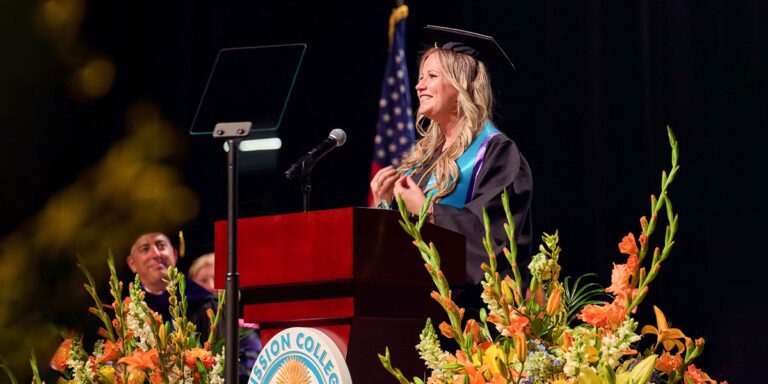
France recently spoke at the United Nations about storytelling and its ability to create impact. The setting carried a deeply personal significance.
James had served as a UN ambassador for the University for Peace. Years after his work had placed him in those rooms, she found herself standing in one, speaking about the power of stories to influence other people.
It was a striking full-circle moment.
France explains, “It was through his connections and the people that knew him that put me with the Creative Women when he passed.” The gathering brought together women with significant public and professional influence, including ambassadors and political figures. France listened to other women share their experiences and found herself thinking about the voice she had begun to develop.
Her life had changed dramatically since the day she became responsible for navigating the aftermath of his death. The woman who once wondered what her future could possibly look like had created a platform with a growing audience, built new professional relationships, and begun speaking publicly about the lessons she had learned.
She had not erased the life she shared with James. She had learned how to carry it forward while making room for another life of her own.
Making Room for What Comes Next
France’s story rests on a difficult truth families often avoid. Loss is unavoidable, but preparation can make its aftermath more manageable. Her work encourages women to have difficult conversations while life is still stable, understand the responsibilities each person carries, and make sure someone else could step in if circumstances suddenly demanded it.
She learned how quickly grief can take over a life. Reinvention became her way forward after losing the life she had built with James. “I want to see myself happy like everybody else is happy walking down the street,” she says. “And how do you do that? You have to get busy and take care of yourself first and reinvent yourself.”
Through loss, France found a new identity. Through reinvention, she found purpose. Through community, she found a voice strong enough to carry her experience into rooms she once entered only through her husband’s connections.
Now she is using that voice to prepare other people for the moments no family wants to imagine.
Preparing for loss does not mean living in fear of it. It means protecting the life that exists now and giving the people left behind fewer burdens to carry if the unthinkable happens.
Her story is still connected to James. It always will be. Yet the future she is building belongs to her, too.
And in that future, she wants other women to know something she had to learn the hardest way possible: a life can be shattered by loss and still become a life worth living again.