

Sixty percent of American adults say they have lived through at least one experience they cannot explain, according to survey data YouGov released in October 2025, a number barely dented by years of debunking podcasts, skeptic conferences, and investigation channels built specifically to disprove them. Gallup’s own figures, published the same year, report that 48% of American adults believe in psychic or spiritual healing. They believe ghosts are real, not as metaphor or folklore, but as something occupying the same rooms as the living.
The numbers matter because paranormal experiences are often treated as fringe entertainment when the people reporting them are hardly a fringe population.

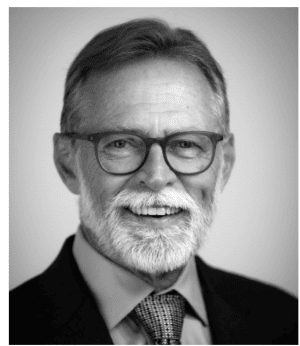
Doug Owen, Author, Podcast Host, and Paranormal Investigator (Source: Doug Owen)
The debate usually arrives with its positions already locked. One side sees spirits in every unexplained sound; the other reaches for a rational explanation before the story has finished. Between those two groups is an uncertainty where the investigation actually begins, one rooted in the question: What actually happened?
Paranormal culture has also entered a strange zeitgeist due to technological accessibility. Smartphones can record high-definition video at any hour, audio equipment is widely accessible, and AI can manufacture convincing images and voices in seconds. Even ghost hunters have repurposed technologies such as EMFs and the handheld Kestrel 3500NV to search for supposed anomalies. Yet the same tools that make evidence easier to capture have made it harder to establish what evidence deserves trust.
That leaves the field facing an evidentiary problem. A shadow in a photograph can be a figure, a lighting artifact, or a camera interpreting an ordinary object in an extraordinary way. A sound can be a voice, a pipe, interference, or something investigators have yet to explain. Against that backdrop, the pivotal question is whether investigators are willing to test every plausible explanation before settling on one.
Doug Owen has spent decades asking that question. The Idaho-based author and independent paranormal investigator has completed numerous investigations and says he approaches the work as an investigator and not a “ghost hunter.” His work has taken him to locations including the RMS Queen Mary and Winchester Mystery House, while his own experiences became the foundation for his memoir, The Unholy Silence.
Owen’s method, first and foremost, begins with cautious skepticism, even when the person holding the camera is convinced something supernatural has occurred. He recalls investigating a dark patch on a wall at an Oregon property that a maintenance supervisor could not paint over. Owen found the explanation in minutes: a spotlight was casting a shadow. “A lot of times, there’s certainly a logical, rational explanation,” he says. To him, that outcome matters precisely because it removes a dramatic answer from the table.
His own history gives the investigation a more personal edge. The experiences chronicled in The Unholy Silence began after Owen moved into an Idaho home provided through the Catholic Church. He notes that increasingly disturbing events unfolded during a period in which he was deepening his faith, eventually affecting his family and forcing him to reconsider the life he was trying to preserve. “My book is not a victory. I gave myself permission to step off the battlefield,” he says.
Those moments change the questions Owen asks. He notes investigators should document first and interpret later, approaching accounts with the instinct of a journalist or detective. “The first thing we do is try to debunk everything before assigning some paranormal explanation. Is it the water heater? Is it the microwave? Is it a window panel?” Owen explains. “I want to get to the bottom of every sound, every smell, every anomaly.”
Owen is candid about where skepticism earns its keep. “Not everything is a demon,” he says. “Sometimes it’s your medication, or you should probably see a doctor.” He is equally direct about where belief goes wrong, pointing to sensationalized content engineered purely for clicks as damage done to a field that depends on credibility to function at all. Real investigations, he notes, can involve long stretches in which nothing happens. Then an event occurs that demands another look.
Those moments are precisely the reason that keeps Owen investigating. He recalls objects apparently moving across rooms, unexplained sounds, and incidents inside his own home, which he says have been witnessed by other people. He notes that some cases have yielded ordinary answers. Others remain unresolved.
“Some of the things are just irrefutable; there’s simply no logical explanation. It’s just a harrowing experience,” he says. Belief can close a case before the evidence has been examined; skepticism can do the same thing from the opposite direction. Owen’s approach leaves the question open. His growing media work reflects that perspective.
He hosts The Unholy Podcast and The Unholy Broadcast, continues developing new books and projects, and recently appeared as a featured guest on the premiere episode of Beyond the Normal, a paranormal radio series. His ambition is to bring The Unholy Silence to screen, yet the larger proposition behind his work is to reinforce the message that unexplained experiences deserve investigation precisely because the explanation is still missing.
“I’m not seeking the paranormal, I’m just looking for the intelligence behind the unseen force,” he says. Whether those answers lead to a ghost, a faulty wire, a perceptual phenomenon, or something harder to categorize, the investigation, he believes, has already produced the question worth asking.