
For decades, the response to unsafe drinking water has often centered on delivery, with organizations bringing in filters, pumps, and wells and then moving on to the next project. The need remains vast. According to the latest global estimates from the WHO and UNICEF, 2.1 billion people worldwide still lack access to safely managed drinking water. An important question sits behind that figure. What happens to a water project once the organization that built it leaves?
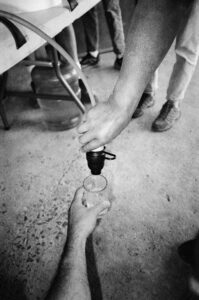
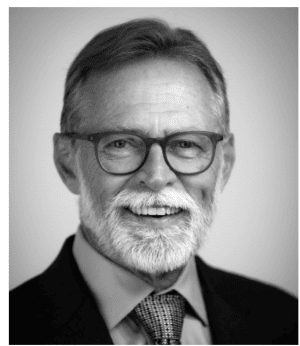
Civil and environmental engineer Cyrus Maroofian has built his organization around that question. He is the founder of Water Access To All (W.A.T.A.), a nonprofit that provides household water filters and develops community-led water programs in several countries. Drawing on a decade of international experience, Maroofian combines hands-on humanitarian work with his current postgraduate studies in humanitarian action. “I don’t see the people we work with as beneficiaries,” Maroofian says. “They’re partners, and I wouldn’t succeed without them. Everything we do depends on local teams.”
In Maroofian’s view, lasting access depends on what happens after installation. Researchers writing in The Conversation earlier this year reported that at least 100,000 of the handpumps installed across sub-Saharan Africa are not functioning. They pointed to donor programs that tend to run on short funding cycles of one to two years, which often favor new projects over maintaining existing ones.
For Maroofian, that gap raises a question of ownership. He believes conventional aid models can become too dependent on outside funding and delivery, and that communities should be partners, not passive recipients. His view aligns with a goal the wider humanitarian sector has set for itself. The UN’s Global Humanitarian Overview says the effort to shift decision-making and resources toward local and national groups is a long-standing priority. However, the report notes that progress has been slow.
The same report observes that the first response to any emergency typically comes from affected communities themselves. In Colombia, it highlights local organizations that help match humanitarian priorities to community needs, while women’s groups lead risk management committees. If people are often the first to act, they may also be well placed to keep the work going.
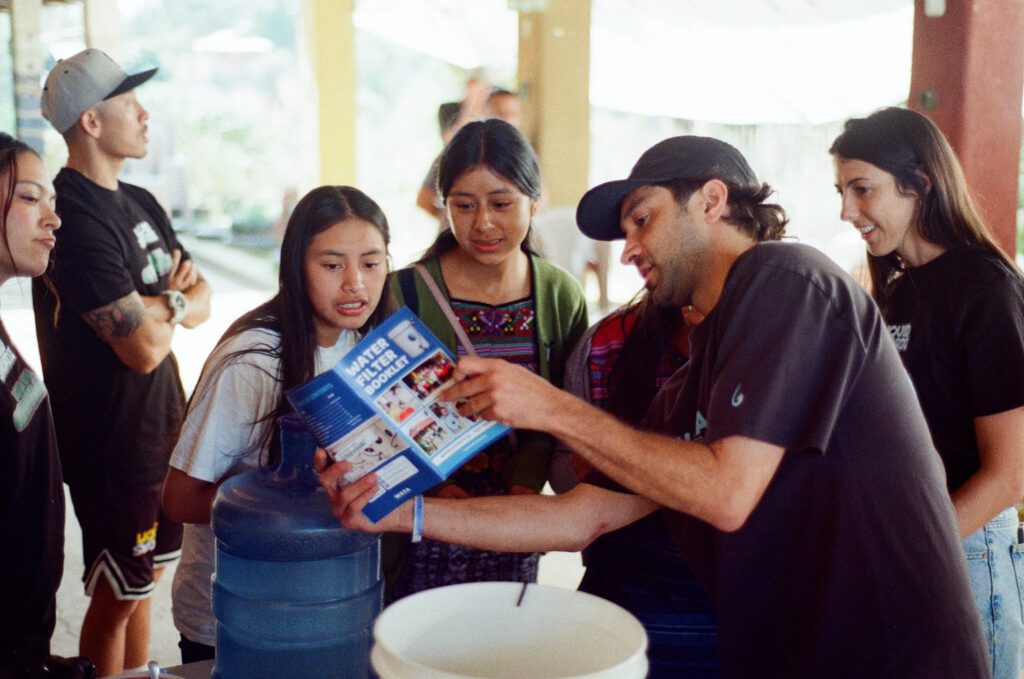
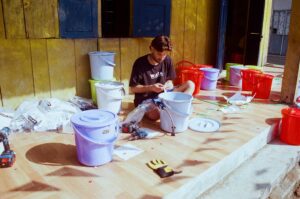
W.A.T.A. puts that idea into practice by training local ambassadors to install filters, conduct follow-up visits, and eventually lead new projects. In Guatemala, a local school is incorporating the ambassador program into its curriculum. In Colombia, Indigenous women who are already skilled artisans and community leaders are becoming water educators, while in Myanmar, young members of the national surfing community are taking on similar roles.
Maroofian says the approach changes from place to place. “We work with each community’s capacity, with what it needs, and with how it functions in its own culture,” he explains. “Empowerment looks different depending on who you’re working with, so the model has to adapt.” While some established systems work well, he believes lasting progress may depend on who takes responsibility after the first response.
For Maroofian, the clearest sign of progress came when an ambassador in Guatemala reached out with a request. “He told me his family wanted to set up filters for a nearby community and asked if he could do it through W.A.T.A.,” he says. “He traveled to a neighboring town, along with his pregnant wife and son, and they installed 50 filters on their own. All I did was provide the filters. Once his own needs were met, it provided him with the capacity to help others.”
Those connections are starting to cross borders, with partners from Guatemala now supporting work in Colombia. Maroofian hopes such exchanges can grow into something larger. “We often talk about how many people lack clean water, but rarely about how many people have the ability to help,” he notes.
In his view, each community that builds its own system gains the ability to support another. “The goal is a system that builds itself, where communities learn from each other instead of waiting for someone to fly in,” Maroofian says.
Maroofian believes humanitarian work is often measured by what goes out, such as filters distributed, wells drilled, or people reached. To him, those numbers matter, but they may not capture whether progress continues once outside support steps back. A more telling measure is how much a community can accomplish on its own, and how much it can pass on to others, he notes.
He sees the people he serves as partners with knowledge, relationships, and ambition of their own. Meaningful impact, in his view, does not always require large budgets or complex systems. While he acknowledges that not everyone is in a position to act right away, he believes the first step is often simpler than it seems. Maroofian says, “If you want to help somebody, there’s very little stopping you other than yourself.”