
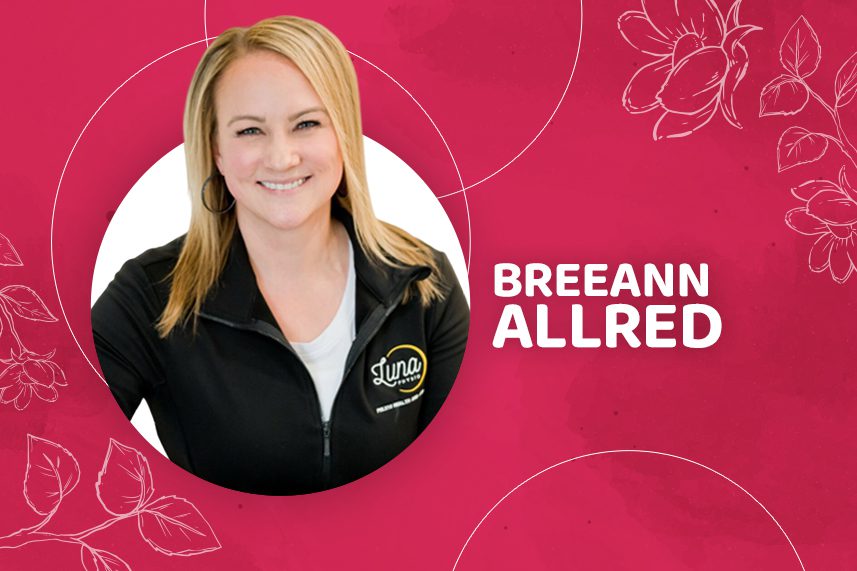
BreeAnn Allred is the founder of Aylara Pelvic Health and a pelvic health physical therapist with more than 17 years of clinical experience. After earning her Doctor of Physical Therapy degree from the University of Utah in 2007, she has dedicated her career to helping women overcome pregnancy and postpartum challenges, pelvic pain, bladder and bowel dysfunction, and other conditions that are often dismissed as “just part of being a woman.” A breast cancer survivor herself, Allred is passionate about challenging those assumptions and helping women understand that many of these symptoms are treatable.
In this conversation, Allred explains why pelvic health deserves far more discussion, how prevention can change long-term outcomes, and why education is just as important as treatment. She shares the philosophy behind Aylara Pelvic Health, discusses the symptoms women should never ignore, and offers practical advice for taking the first step toward healing.
What inspired you to specialize in pelvic floor physical therapy?
BreeAnn Allred: I’ve always loved the medical field, but I don’t do well with blood, so physical therapy was a great fit. Early in my career, I worked in a spine clinic where I treated many pregnant and postpartum women dealing with low back pain. That naturally led me to learn more about pelvic health.
Then, in 2009, I became pregnant with twins and experienced my own challenges. I remember thinking, “I have all of this background knowledge, and I’m still struggling. Why aren’t we talking about this?” We tend to accept common symptoms as if they’re normal. Just because back pain during pregnancy is common doesn’t mean it’s normal. It usually means there’s dysfunction somewhere, and we can do something about it.
After helping thousands of women, what are some of the biggest misconceptions you wish people understood?
BreeAnn Allred: One of the biggest is urinary leakage after having a baby. Even my own mother would say, “I can’t jump on the trampoline anymore.” We’ve accepted that as part of life, but it isn’t normal. It usually means the pelvic floor hasn’t recovered properly.
Other common issues include tailbone pain, constipation, fertility challenges, and painful intimacy. Constipation can happen because the pelvic floor muscles aren’t relaxing the way they should. Pain during sex is another symptom people often assume they simply have to live with, but that’s not normal either.
You founded Ilara Pelvic Health with a different philosophy than many traditional clinics. What sets your approach apart?
BreeAnn Allred: Prevention is a huge part of what we do.
We maintain our cars regularly, but we rarely think about maintaining our bodies. If someone is planning to become sexually active, preparing for pregnancy, or entering a new stage of life, why not prepare their body first?
We also look at the whole body rather than focusing on one isolated symptom. Even though I specialize in pelvic health, the pelvic floor is connected to everything. We evaluate the feet, knees, hips, rib cage, and core because they’re all contributing to how the body functions. If you only look at one area, you can miss what’s actually causing the problem.
For readers who may not know, what exactly is the pelvic floor?
BreeAnn Allred: The pelvic floor is a group of muscles that sits at the bottom of the pelvis, surrounding the urethral, anal, and vaginal openings. You can think of it as a hammock supporting those structures.
It plays an important role in bowel and bladder function, sexual function, pressure management throughout the body, and transferring force between the upper and lower body. It’s a central hub for many essential functions.
Can you share an example of a patient whose symptoms weren’t immediately recognized as pelvic floor related?
BreeAnn Allred: I treated someone who had seen two physical therapists for deep hip pain. The pain was around the groin and the sitting bone. They’d been treated for hamstring problems, hip issues, and even had MRIs, but nothing explained the pain.
The pelvic floor works closely with the hip muscles. We identified a deep muscle that could only be accessed through the pelvic floor region, and once we treated it, the patient immediately recognized it as the source of the pain.
The treatment principles are the same as other areas of physical therapy. We restore normal muscle tension, improve strength, increase function, and help everything work together again.
What other conditions do you commonly treat?
BreeAnn Allred: Painful periods are a great example. I work with people of all ages who miss work every month because their menstrual pain is so severe.
Often, there’s an interaction between the uterus, abdominal muscles, and pelvic floor muscles. By helping those systems work together more effectively, many patients are able to return to work and daily life without losing several days every month.
Have you developed a framework that guides your treatment process?
BreeAnn Allred: Yes. Every patient begins with a comprehensive evaluation where we assess the rib cage, core, hips, knees, ankles, and pelvic floor. We’re looking for asymmetries, alignment issues, muscle tension, strength deficits, and movement patterns.
From there, our healing process follows four seasons.
Winter focuses on calming the body, reducing irritation, and supporting early healing.
Spring introduces more movement, mobility, and strength as the body begins to recover.
Summer builds toward each person’s goals. Someone training for competitive CrossFit needs a different program than someone who simply wants to enjoy daily walks.
Fall is about prevention. We build enough resilience that patients have a margin of safety, so small setbacks don’t immediately lead to recurring problems.
The entire Ilara philosophy is inspired by the moon and the natural rhythms women experience throughout life.
Education seems to be a major part of your mission. Why is that so important?
BreeAnn Allred: We educate people in many different ways. We work one-on-one with patients, host workshops, and now we’re expanding through podcasts and other resources.
Our goal is to empower people to live their best lives. When people understand how their bodies work, they’re able to make better decisions and recognize problems earlier.
You’re launching the podcast Healing From the Core. What motivated you to start it?
BreeAnn Allred: There are so many people who tell me, “I wish I’d known this sooner,” or, “I wish someone had referred me to you earlier.”
We want this information to reach people wherever they are. If someone hears an episode and realizes, “That’s exactly what I’m experiencing,” they can seek help much sooner instead of living with dysfunction for years.
I also want people to know that men have pelvic floors too. While women experience more pelvic floor dysfunction because of pregnancy, childbirth, menopause, and hormonal changes, we treat men as well.
What symptoms should women never ignore?
BreeAnn Allred: Urinary leakage is one of the biggest.
Any unwanted urine leakage is considered incontinence, even if it’s only a small amount. People often think incontinence only affects elderly women, but that’s not true.
Menopause is another time when many women experience significant changes. Vaginal tissue can become dry and painful, which affects intimacy and relationships. These are issues worth addressing.
Pressure in the vaginal area is another important symptom. It can indicate prolapse, where the bladder, bowel, or uterus begins to descend into the vaginal canal. If it’s treated early, conservative care is often very effective. Waiting until it’s severe may require surgery.
Many women feel embarrassed talking about these issues. What would you say to them?
BreeAnn Allred: I always come back to the same message: what is common isn’t always normal.
If you’re experiencing something, there are probably hundreds or thousands of other women experiencing it too. The difference is that very few people are talking about it.
For generations, women have often been told that these symptoms are simply part of postpartum recovery, menopause, or being a woman. Fortunately, medical research is changing that. We’re understanding much more about the female body and recognizing that these conditions have real physiological causes.
Start the conversation. Talk with your friends. Talk with your healthcare providers. Share resources. The more we talk about it, the easier it becomes for others to seek help.
What simple habits can support pelvic floor health?
BreeAnn Allred: Start with the basics. Eat plenty of fruits and vegetables, get enough fiber, and stay hydrated.
For pelvic floor health specifically, don’t hold your breath. Holding your breath creates downward pressure throughout the body, especially when lifting something heavy.
I always tell my patients, “Exhale with the effort.” Breathe out during the hardest part of the movement.
If readers remember just one message from this conversation, what do you hope it is?
BreeAnn Allred: You know when something isn’t right.
Trust yourself, even if you’ve been told otherwise. Keep looking until you find the answers you need.
You’ve also created a screening tool to help people know when it’s time to seek care. Can you tell us about it?
BreeAnn Allred: Many people ask how they know whether they should see a pelvic floor physical therapist.
We created a free screening questionnaire. If you answer “yes” to three or more questions, it’s a strong indication that you should seek an evaluation from a pelvic floor physical therapist.
I’d love to help if you’re local, but there are wonderful therapists across the country and internationally. The important thing is getting help sooner rather than later.
Before we wrap up, is there anything else you’d like readers to know?
BreeAnn Allred: I want people to recognize that they’re an active part of their own healing.
Our goal isn’t simply to manage symptoms or have patients coming back every few months. We want them to heal, understand their bodies, and leave with the tools they need to maintain that progress for years to come.
