

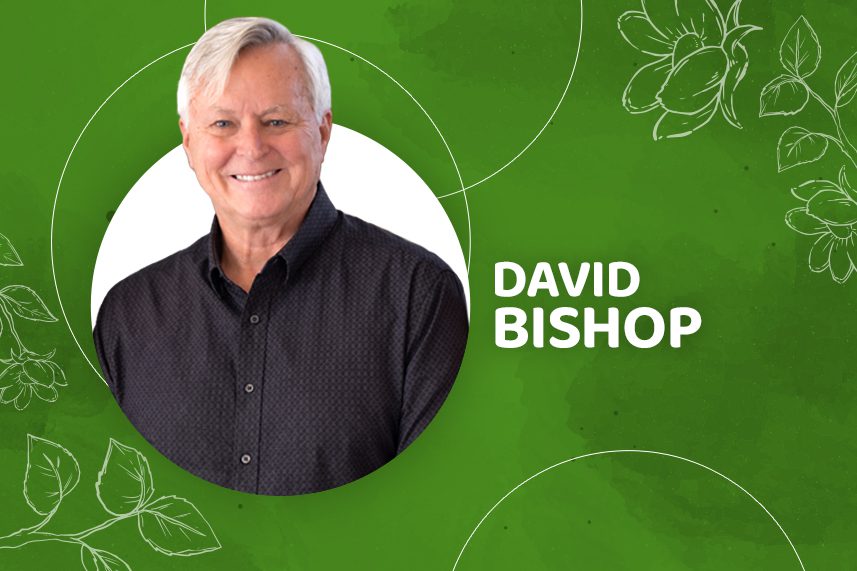
David Bishop is an Executive Organizational Expert, leadership coach, and founder of The David Bishop Group. For decades, he has led many international firms through times of growth, turmoil, and industry upheaval. Before becoming a sought-after advisor to CEOs and founders, he served as President of Sony Pictures Home Entertainment and MGM Home Entertainment. During that time, he led large teams to revenue growth and managed operations amid changing technology and consumption patterns.
David now helps leaders create high-performing organizations, lasting cultural shifts, and a strategy for the future through the use of neuroscience. In this interview, he shares tips based on his decades of experience as an executive leader and coach. He also shares insights with us into the changing business landscape and how to shift away from reactive leadership.
David, before you became known for advising CEOs on anticipating disruption, you were leading global home entertainment divisions at Sony Pictures and MGM during periods of intense industry transformation. Which specific early leadership decisions or moments made you realize that “reactive leadership” was no longer enough to sustain long-term organizational success?
David Bishop: Back in 2008, we knew our industry was changing, but we underestimated the magnitude of that change. Consumers were moving away from purchasing DVDs and embracing lower-cost, more convenient alternatives like Netflix and Redbox. What looked like a gradual shift quickly became a fundamental change in consumer behavior.
Around that time, I read a book by Bob Johansen that introduced me to the concept of VUCA: a world that is Volatile, Uncertain, Complex, and Ambiguous. A light went on for me. I realized that our business, and in fact most businesses, would never return to a period of long-term stability. Change itself had become the environment.
That realization changed how I thought about leadership. Organizations needed to stay on the balls of their feet, constantly scanning the horizon, identifying emerging trends, and empowering people to make quick but thoughtful decisions. Traditional top-down leadership was simply too slow. The companies that would survive were the ones that could anticipate change rather than merely react to it.
You often emphasize that culture is the operating system of an organization. In your experience leading large-scale teams through digital disruption, what were the earliest “cultural signals” inside a company that told you whether the organization was built to anticipate change, or would only respond once pressure hit?
David Bishop: Throughout my career, both leading teams and coaching executives, I’ve found that you can often tell within a short time whether an organization is built for change.
One of the first things I look for is alignment. If people across the organization can clearly articulate the company’s key strategies, I know the team is rowing in the same direction and striking the oars at the right angle.
The second signal is decision-making. If every meaningful decision has to travel up to the C-suite, I know there’s trouble ahead. Organizations that thrive in disruption create clarity around purpose and values, then trust capable people to act. They build distributed leadership rather than bottlenecks.
Cultures that anticipate change don’t wait for permission. They create the conditions for intelligent action.
Many executives struggle when moving from high-performance operator roles to enterprise-level strategic leadership. From your work with CEO founders, what are the most subtle but critical mindset shifts leaders must make to stop optimizing for short-term execution and start building systems that anticipate future disruption?
David Bishop: Most CEO founders reach a point where the company begins to scale, and the behaviors that made them successful in the startup phase no longer work. It’s often a painful transition because they feel a genuine sense of loss. They are no longer involved in every decision, every customer conversation, or every problem.
This is my sweet spot.
I help founders get off the dance floor and onto the balcony. When you’re on the dance floor, you’re caught up in the action. From the balcony, you can see the entire system, patterns, risks, opportunities, and the moves everyone else is making.
The shift is from being the smartest operator in the room to becoming the architect of the system. Instead of solving every problem, they build a culture and leadership team that can solve problems without them. That’s when an organization becomes truly scalable.
In your time overseeing billion-dollar revenue growth and global teams, you’ve seen both successful and failed transformation efforts. Can you share a specific instance where a company thought it was preparing for disruption, but structural or leadership blind spots caused it to fall back into reactive decision-making?
David Bishop: I can point to an entire industry: the music business.
The industry spent years trying to fight an overwhelming consumer desire to stream and download content. Instead of asking, “What does the customer want?” many companies asked, “How do we preserve our existing business model?”
That’s a losing battle.
Once consumers decide there’s a better way, it’s very difficult to push them back. Some of my studio competitors made similar mistakes. They focused on protecting legacy revenue streams rather than building for the future.
One of the biggest leadership traps is confusing resistance with strategy. You can’t stop a wave. You have to learn how to ride it.
Your approach integrates neuroscience-based assessments like The Predictive Index and learning agility tools to improve leadership effectiveness. How do you help executives balance data-driven decision-making with the unpredictable human behaviors that often determine whether a culture actually becomes future-ready?
David Bishop: I think one of the most underutilized capabilities in business is awareness.
It starts with self-awareness: understanding your own strengths, biases, and blind spots. From there, it expands into another critical element of emotional intelligence: empathy, or the ability to understand the emotions and perspectives of others.
Data is enormously valuable. It helps us identify trends, measure outcomes, and understand how customers respond to products and services. But data alone doesn’t build trust, create engagement, or inspire people to embrace change.
The leaders who create future-ready cultures combine hard data with a deep understanding of human behavior. They know that organizations don’t change because spreadsheets tell them to. They change because people choose to.
And finally, let’s discuss how you use the NBI™️Assessment to build what you describe as a “team brain,” mapping how different thinking styles interact, complement, or clash within leadership groups. In your experience, what is the most common pattern you see in executive teams where the “team brain” is misaligned? How do you intervene to rebalance that cognitive system so it actually improves decision-making and culture?
David Bishop: The most common pattern I see is that like attracts like. Leaders naturally hire people who think the way they do because communication feels easier and conflict is reduced.
The downside is that teams become cognitively homogeneous. They may move quickly, but they often miss risks, opportunities, or alternative approaches because everyone is looking at the problem through the same lens.
The NBI framework helps make those thinking preferences visible. My goal is to build a true “team brain” where analytical thinkers, strategic visionaries, practical implementers, and relationship builders all have a voice.
The best decisions rarely come from people who think the same way. They come from diverse thinking styles and diverse life experiences working toward a shared objective.
Conclusion
David Bishop believes organizations perform best when they prepare for change before it arrives. Throughout his career, he has seen industries transformed by shifting customer expectations, new technologies, and changing market conditions, and he emphasizes that leaders must create cultures ready for what comes next. In the interview, David highlighted the importance of strategic thinking, distributed leadership, and organizational alignment. He explained that future-ready companies trust people to make decisions, encourage different perspectives, and create environments where learning and adaptation are part of everyday work. David’s insights offer a valuable reminder that the most successful leaders prepare for disruption, learn from it, and use it as an opportunity to grow stronger.