
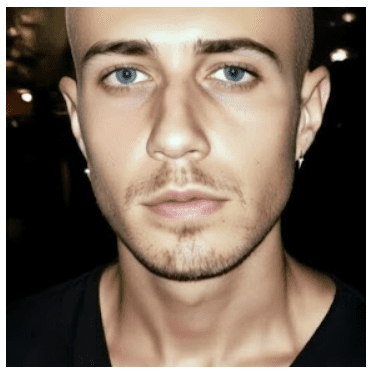
Robia DeVille’s life and work are anchored in a singular conviction that human beings are not finished products but evolving drafts shaped by choice, consequence, and discipline. As an Arab-American actor and writer, he draws from a past defined by instability, loss, and moral ambiguity to construct narratives that confront the question of how individuals find direction in a disordered world. He believes his voice carries the weight of lived experience and is defined by clarity rather than chaos.
He says his earliest understanding of the world was shaped by trauma that he did not yet have the language to process. Born to parents who fled Lebanon and grandparents from Palestine, DeVille grew up in the shadow of displacement and inherited conflict. He notes that there were periods of homelessness and emotional volatility that felt unpredictable and, at times, incomprehensible.
As a child, DeVille says he internalized anger. As an adult, he reframed it. “My father had to learn how to use a rocket launcher before he learned how to be a father,” he says. “I spent years trying to understand him, and then I realized he was trying to understand himself while raising a family. That shift became foundational. Forgiveness replaced my resentment, and with it came a broader awareness that many individuals inherit trauma without recognizing its origins.”
That unresolved inheritance gave way to a prolonged period of self-destruction. The consequences culminated in incarceration and a growing awareness that his life lacked direction. The defining rupture came with the passing of his younger brother. Grief forced a confrontation with reality that could no longer be deferred. What followed was a convergence of events that reshaped his trajectory.
“I buried my brother, finished court, got sober, and got discovered by Hollywood almost at the same time,” he says. The compression of loss, accountability, and opportunity marked a decisive turning point. “That moment showed me that darkness can either consume you or give you purpose,” he reflects.
At the center of that transformation is a personal philosophy he defines as ‘royalty,’ a concept rooted in discipline rather than status. “I call myself a prince because I hold myself to a higher standard,” he explains. “It reminds me that every decision reflects who I am becoming.” The philosophy is reinforced through deliberate practices, including celibacy and symbolic markers such as a ring that represents restraint and accountability. “The ring is not a decoration,” he says. “It is a boundary. It means I am unavailable to the things that once controlled me.”
Over the past decade, he has translated these principles into storytelling, developing scripts that examine morality, power, spirituality, and transformation. Mentored by a professional screenwriter (Screenwriter for IT and Director/screenwriter for Naked Singularity), he approaches writing as a means of exploration rather than instruction. “I don’t want to tell people what to think,” he says. “I want to give them something that makes them question who they are.” His work is anchored in a defining concept that extends beyond narrative into identity.
“I am God’s rough draft,” he states. “I am not finished, and neither is anyone else.”
According to him, his first script, God’s Rough Draft, embodies this philosophy. “It is perfection that hasn’t yet surfaced,” he explains. The story explores human imperfection, redemption, and spiritual growth through symbolic representations of angels and demons, reflecting his own journey through trauma, addiction, loss, and recovery. “It is about understanding that you can come from chaos and still move toward order,” he says. “The title functions as both a narrative device and a personal declaration.”
His second project, which he calls ‘The Familiar,’ draws from Dante’s Inferno to construct a contemporary allegory of descent and awakening. The story follows a figure moving through a version of hell on earth, gathering lessons that are ultimately intended for a returning prince known as Shadow. “The prince is someone who has already suffered, already learned, and comes back with clarity,” DeVille explains. The narrative engages with leadership, moral guidance, and the tension between chaos and structure, reflecting his belief that societies in crisis require individuals willing to embody discipline and direction. “People are searching for leadership,” he says. “The question is whether anyone is willing to position themselves.”
DeVille’s story is a continuous process. This year Robia DeVille was a selected Artist for Johnny Depp presents The People’s Artist, alongside being chosen to participate in the Nomination Committee for the Actor Award (SAG-AFTRA). His work suggests that clarity is earned through research and identity is built through discipline sustained over time. “We are all unfinished projects,” he says. “The difference is whether you accept that and keep rewriting, or pretend you are already doing fine.”
