

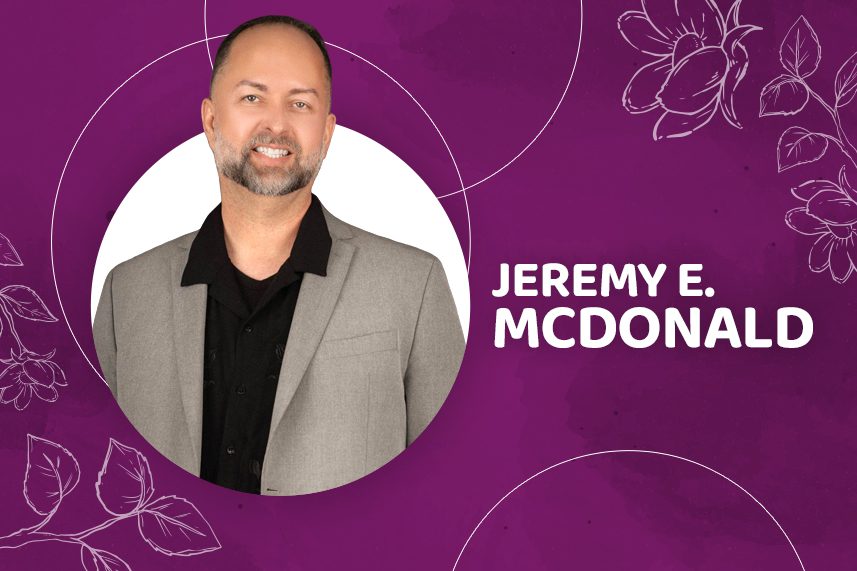
Jeremy E. McDonald, M.Ed., B.B.A., is a transformational speaker, leadership strategist, and adult learning expert with nearly 30 years of experience helping individuals, teams, and organizations unlock greater self-awareness, communication, leadership effectiveness, and human potential. With a background spanning Fortune 500 Learning & Development, executive coaching, leadership facilitation, and transformational speaking, Jeremy has worked with organizations including HSBC, MetLife, New York Life, Primo Water, Citigroup, and American Advisors Group. His expertise includes leadership development, performance coaching, instructional design, organizational learning strategy, and human-centered transformation.
You have nearly 30 years of experience in leadership development and adult learning. What first inspired you to pursue this path?
Jeremy E. McDonald: For me, it all started with my mother. I was raised by a single mom who put herself through college while raising me, and she became my first example of authentic leadership. She showed me that leadership isn’t defined by a title but by resilience, kindness, empathy, and the way you treat people. Watching her perseverance and genuinely caring for those around her left a lasting impression on me.
I also grew up with dyslexia, which shaped the way I experience learning and communication. Early on, I realized that people don’t all learn the same way, and that insight became one of my greatest strengths. It taught me to be patient, creative, and intentional in how I teach, coach, and develop others. Instead of expecting people to fit in with a single method of learning, I learned to adapt my approach to help them succeed.
Those experiences inspired a lifelong passion for helping people discover their own capabilities. I came to understand that one conversation, one mentor, or one new perspective can completely change the trajectory of someone’s life.
As I built my career in leadership development and adult learning, I found the greatest joy in watching people have those breakthrough moments when they stop doubting themselves and start recognizing their own potential. For me, leadership development has never been just about skills or processes. It’s about helping people build confidence, increase self-awareness, and become the best version of themselves.
Nearly 30 years later, that mission still guides everything I do. Whether I’m facilitating training, coaching leaders, or speaking to an audience, my goal is to help people understand that their perceived limitations don’t define them. In many cases, the very challenges they’ve overcome become the foundation for their greatest strengths and for their ability to lead others.
What originally sparked your passion for helping people become more self-aware and effective leaders?
Jeremy E. McDonald: For me, it started long before I ever held a leadership position. Growing up with dyslexia, I was fortunate to have teachers who looked beyond my challenges and saw my potential. They didn’t define me by what I struggled with. They encouraged me, believed in me, and took the time to help me learn in ways that worked for me.
Their patience and genuine belief in my abilities changed the course of my life. They gave me confidence when I didn’t have it myself, and they showed me that one person who truly believes in you can make all the difference.
As I moved into my own career, I noticed I felt that same sense of purpose whenever I helped someone push past fear, break through a limiting belief, or discover a strength they didn’t know they had. Watching people grow became one of the most rewarding parts of my work.
Those early educators inspired me to pay that forward. I wanted to be the person who helps others see possibilities instead of limitations, who creates environments where people feel safe to learn, and who gives individuals the tools to become the best version of themselves.
Over time, I also came to believe that the greatest barrier to success isn’t a lack of talent or intelligence. It’s usually a lack of self-awareness. When people understand why they think, react, and communicate the way they do, they gain the power to make intentional choices rather than run on autopilot.
That’s why I often say that leadership begins long before you lead a team. It begins with learning to lead yourself. When you build self-awareness and take ownership of your own growth, you lay the foundation to lead others with authenticity, empathy, and purpose.
What leadership qualities are most critical in today’s rapidly changing workplace?
Jeremy E. McDonald: Technical expertise will always matter, but I believe the leaders who thrive today lead with adaptability, emotional intelligence, authenticity, curiosity, and humility.
People don’t just want someone who can make decisions. They want someone they can trust. The best leaders create psychological safety, communicate transparently, and stay grounded during uncertainty. They understand that leadership isn’t about having all the answers. It’s about creating an environment where people feel empowered to contribute their best ideas and work through challenges together.
One quality I think gets overlooked is self-awareness. Great leaders know their strengths, but they also know their limits. They’re not afraid to say, “I don’t know” or “I need your help.” Rather than seeing that as a weakness, they see it as a chance to draw on the expertise of the people around them.
Some of the most effective leaders I’ve worked with are those who invite collaboration, ask good questions, and trust their teams. That kind of humility builds credibility, encourages innovation, and creates a culture where everyone feels valued.
Ultimately, the future belongs to leaders who balance performance with humanity, confidence with curiosity, and authority with empathy. Those are the leaders who earn trust, build resilience, and bring out the best in the people they serve.
What role does emotional intelligence play in organizational success?
Jeremy E. McDonald: I’d argue that emotional intelligence is one of the strongest predictors of sustainable leadership success.
Organizations are made up of people, and people bring emotions into every interaction, whether we acknowledge it or not. Leaders with high emotional intelligence communicate more effectively, handle conflict with greater skill, build stronger relationships, and create cultures where employees feel valued, heard, and engaged.
When leaders develop emotional awareness, performance doesn’t suffer. It improves. As trust deepens and collaboration strengthens, people feel safer contributing ideas, taking ownership, and supporting one another. The result is stronger teams, healthier cultures, more innovation, and more lasting success.
To me, emotional intelligence isn’t a soft skill. It’s a core leadership skill. The ability to understand yourself and connect genuinely with others builds the kind of trust that allows people, teams, and organizations to truly thrive.
Why do so many organizations struggle with leadership development despite investing heavily in training programs?
Jeremy E. McDonald: Because information alone doesn’t create transformation.
Many organizations treat leadership development as a checklist of competencies or a series of workshops, but lasting growth requires something deeper. It involves shifts in mindset, self-awareness, daily habits, and a genuine willingness to keep learning and adapting. Someone can sit through a communication seminar or finish an online course, but if they never reflect on their own behavior or put those lessons into practice, meaningful change rarely follows.
I also think organizations sometimes make the mistake of trying to develop every leader the same way. People have different strengths, different experiences, and different ways of learning. Effective leadership development creates multiple pathways for growth and gives people the space and support to discover their own leadership style while building on their unique strengths.
The most successful organizations don’t just train leaders. They invest in them. They offer coaching, mentoring, room for reflection, stretch assignments, and an environment where it’s safe to learn from mistakes. They encourage curiosity and collaboration rather than demand perfection.
Leadership isn’t a certification you earn once. It’s a lifelong process. When organizations invest not just in skills but in people, they develop leaders who are more authentic, more resilient, and better equipped to help others grow alongside them.
Your book is titled The Sovereign Mindset: Unlocking Your Divine Potential. What exactly is a “sovereign mindset”?
Jeremy E. McDonald: To me, a sovereign mindset is the ability to consciously choose your thoughts, beliefs, and responses rather than being driven by past conditioning, fear, or outside expectations.
It’s the recognition that while we can’t always control our circumstances, we can control how we interpret them and how we respond. That shift creates real freedom.
The word “divine” speaks to the extraordinary potential that exists within every person. Whether someone takes that as a spiritual idea or simply as their highest possible capacity, the message is the same: we are capable of far more than we usually give ourselves credit for.
A sovereign leader doesn’t wait for permission to grow. They take responsibility for their own transformation.
What daily practices help cultivate greater self-awareness and personal growth?
Jeremy E. McDonald: The most powerful practices are often the simplest.
I encourage people to spend a few quiet minutes each day observing their thoughts rather than immediately reacting to them. Journaling, mindfulness, gratitude, intentional breathing, and asking yourself questions like “Why did I respond that way?” or “What belief is driving this decision?” can produce real insight over time.
I also recommend seeking honest feedback and staying genuinely curious about yourself. Self-awareness isn’t about self-criticism. It’s about observing yourself with compassion so you can grow with intention.
When you think about unlocking human potential, what is the biggest misconception people have?
Jeremy E. McDonald: The biggest misconception is that human potential is something we must go out and find, as if it’s waiting somewhere outside of us. I think most people already have what they’re looking for. They just haven’t recognized it yet.
Too often, we search for confidence, purpose, or a sense of worth in our careers, relationships, achievements, or other people’s opinions. But our greatest strengths are usually already there, buried under layers of fear, self-doubt, and stories we’ve been carrying for years.
Transformation isn’t about becoming someone new. It’s about remembering who you were before the world told you who you had to be. It’s about setting aside the conditioning, embracing your real self, and trusting the potential that’s been there all along.
When people make that shift, they stop chasing fulfillment outside themselves and start leading from the inside. That’s where confidence grows, resilience deepens, and real potential begins to unfold.
I tell people all the time: you’re not broken, and you don’t need to be fixed. Most of the time, you just need permission to see yourself differently and the courage to become who you already are.
You’re carrying patterns that no longer belong to the person you’re becoming. Once you see that, incredible growth becomes possible.