

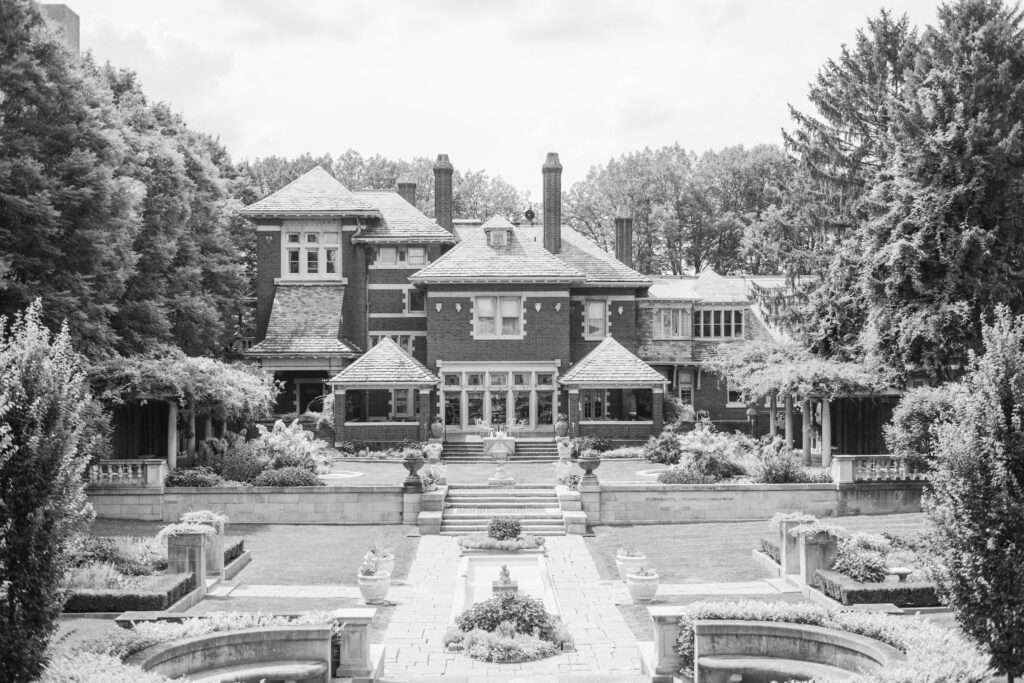
America’s 250th anniversary offers a compelling reason to look backwards. Across the country, history is often encountered through plaques, archives, and rooms arranged behind museum glass. The Inn at Irwin Gardens in Columbus, Indiana, offers something altogether more immersive. Its history is still under the same roof, embedded in the rooms guests enter, the furniture they use, and the gardens through which they walk.
The estate, originally built in 1864 and substantially transformed in the early 20th century, retains an extraordinary amount of its original character. Original woodwork carries its old patina. Period furnishings remain in the rooms where they were placed. Books have stayed in the library for generations. Even the house’s early technological curiosities remain part of the experience, alongside modern electricity and HVAC that allow the property to function as a contemporary place to stay.
Such preservation has become unique. Historic homes can retain a familiar façade while their interiors are remodeled beyond recognition, leaving the appearance of history without much of its substance. Irwin Gardens offers a different experience because so much of the physical record remains intact. A guest does not have to imagine how an early 20th-century household might have looked. The setting is still there.
Jessica Stevens, who owns and operates the property, traces much of that continuity to the family that lived there from 1864 until 2009. The estate passed through one family for nearly a century and a half, allowing its contents and architecture to remain closely connected to the people who created them. Stevens points to photographs showing the same furniture and handmade rugs occupying the same rooms in the 1910s, while the library retains books that have been in the house for generations.
“The house is packed with antiques, many of which were bought new and have never left the house,” Stevens explains. “They’ve been preserved by the same family that cared about them and knew where they came from.”
The history of the property also reaches well beyond its walls. The family behind the estate was connected to the creation of Cummins Engine Company, founded in 1919 by Clessie Cummins and W.G. Irwin, who had earlier been responsible for the house’s major remodeling. Stevens connects that history to Columbus itself, where the family’s influence helped shape the city’s distinctive architectural character through philanthropy and support for modernist public buildings.
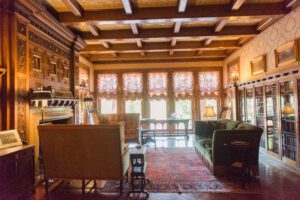
The house contains smaller details that make that larger history tangible. Stevens recalls a dining table purchased by the family while traveling overseas, only for them to discover after it arrived home that it had been manufactured locally in Columbus. Elsewhere, carved elements incorporated into the architecture carry symbolic meaning, while leaded glass features reference the schools attended by members of the family. The building was designed to hold memories within its physical fabric.
The same principle carries into the gardens. Conceived in 1913 with inspiration from Pompeii, they include a sunken garden, a Roman-Pompeian tea house and a bronze elephant associated with the 1904 St. Louis World’s Fair. Wisteria-covered pergolas and marble busts add further layers to an estate where landscape and architecture were conceived as parts of one historical setting.
The property’s relationship with history also makes the modern comforts more significant. The estate can function as a bed & breakfast and events venue, hosting weddings, birthdays, and family retreats alike, while retaining its original architectural character. Its gardener’s cottage, built in 1913, provides additional accommodation with updated interiors, while the main residence retains original features that include a hydraulic elevator and early communication systems.

Stevens sees her role through the language of stewardship. “I think custodian or steward is the right way to look at it,” she says. “This property literally built this community. It’s been a wonderful place for lots of people to work and live and raise their families for many years, and this property represents the linchpin of how it all came together and how it all worked.”
That responsibility carries particular resonance during America’s 250th year. For a guest, staying at Irwin Gardens offers an opportunity to encounter national history through one community and one house, with the evidence still surrounding them. In Stevens’ view, preserving that experience also means considering who might carry it forward.
The Inn at Irwin Gardens is now being positioned for its next chapter, with the owners seeking someone who understands the significance of becoming its next custodian. The opportunity places a rare proposition alongside the anniversary: the possibility of taking responsibility for a property where the history of a family, a town, and an era remains remarkably tangible.