
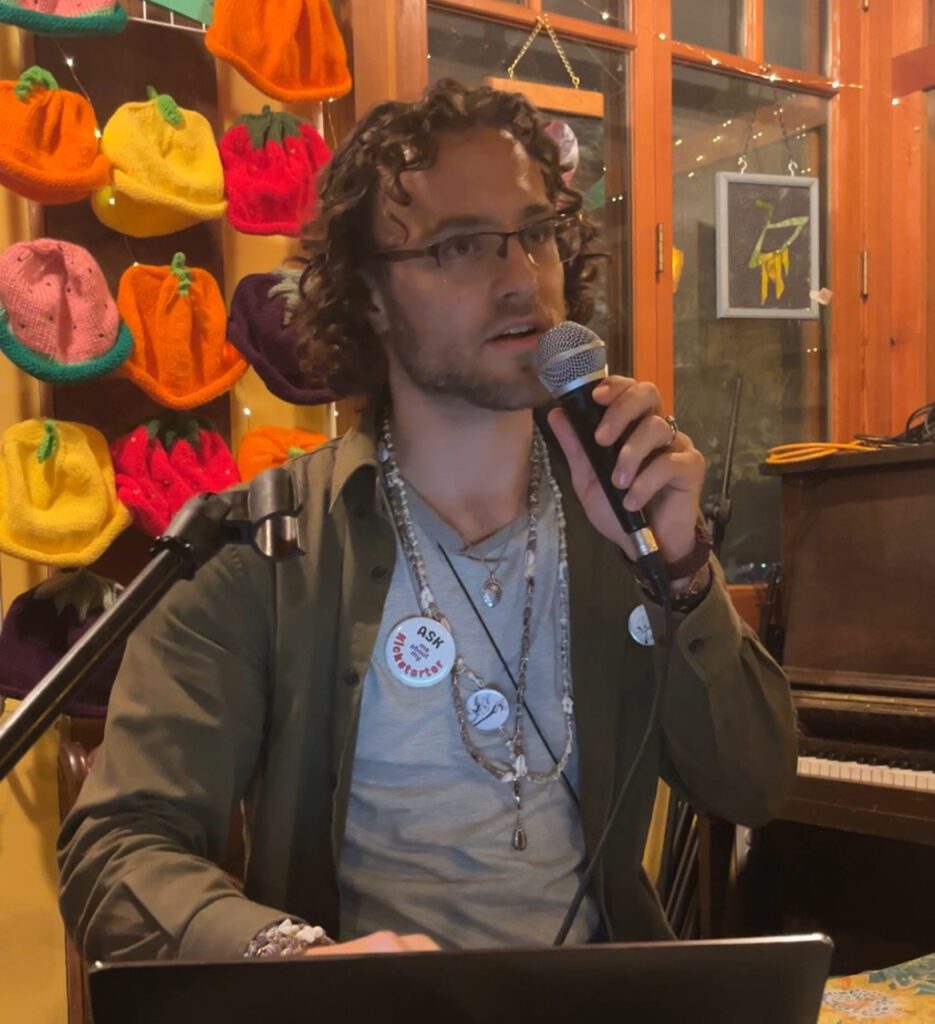
Through Creative Branches, Giacomo offers authors and other creatives a form of paid accountability and personal support, helping them navigate the challenges of building something meaningful while reminding them that they do not have to do it alone.
Creative work is often described as a pursuit driven by passion. Writers, artists, and independent creators are encouraged to follow their ideas, develop their talents, and keep working toward the projects they believe in. Less frequently discussed is what happens between the moments of inspiration: the uncertainty, stalled progress, self-doubt, and isolation that can accompany a creative career.
For many people, the challenge is not simply coming up with an idea. It is finding the confidence and consistency to keep pursuing it when progress becomes difficult, outside encouragement is limited, or the work begins to feel overwhelming.
That is the space Giacomo aims to address through Creative Branches. Describing his role as a paid “accountabilibuddy” and, particularly for authors, an “author therapist,” he offers creatives someone to turn to as they work through the practical and personal challenges of bringing their ideas to life. His approach is grounded in a straightforward message: the road to success in a creative industry is rarely easy, but that does not mean anyone has to travel it alone.
Creative industries tend to celebrate finished products. Published books, completed projects, successful campaigns, and public recognition provide visible evidence of achievement. The less visible work can be considerably harder: returning to a manuscript after weeks of uncertainty, finding the motivation to promote a project, making decisions about the next step, or continuing when an idea has not received the response its creator hoped for.
These experiences can make creative work feel isolating. When people see the accomplishments of others, it is easy to assume that everyone else is progressing more confidently or encountering fewer obstacles. That perception can make ordinary setbacks feel like personal shortcomings.
Giacomo’s approach begins by challenging that assumption. Rather than treating difficulty as evidence that someone is not suited to a creative career, he emphasizes the shared nature of the experience. Other writers and creatives are also navigating uncertainty, questioning their decisions, and working through periods when the next step is not immediately clear.
This perspective matters because creative work is deeply personal. A project can represent years of ambition, an individual’s identity, or a long-held desire to share something with the world. When progress slows, the frustration is not always limited to the task itself. It can affect a creator’s confidence and relationship with the work.
By offering a supportive point of contact, Giacomo seeks to help clients maintain perspective and continue moving forward.
The phrase “author therapist” captures an important distinction in the service Giacomo describes. The intention is not to suggest clinical therapy, but to recognize that authors often need more than technical advice or a conventional productivity plan. They may need someone who can listen, help them work through obstacles, and encourage them to take the next practical step.
The paid “accountabilibuddy” concept similarly moves beyond the idea of simply reminding someone about a deadline. Accountability can provide structure when motivation fluctuates, while an understanding and supportive presence can make it easier to acknowledge challenges without becoming defined by them.
For an author, that might mean working through the uncertainty surrounding a book project or finding a way to regain momentum. For another creative, it could involve staying committed to a larger goal when the day-to-day demands of making and sharing work become difficult.
The value lies in combining encouragement with accountability. Support without action can leave people feeling temporarily reassured but no closer to their goals. Accountability without understanding can make an already demanding creative process feel like another source of pressure. Giacomo’s positioning brings those two needs together, recognizing that progress often requires both a practical next step and the confidence to take it.
Creative Branches describes its work as consultation for book people and crowd funders, placing this support within a wider creative ecosystem. The focus is on people building projects and pursuing ideas, rather than treating creative success as something that happens through talent alone.
The broader message behind Giacomo’s work is that community is not an optional extra in a creative career. It can be one of the things that makes the journey sustainable.
Creative professionals often work independently, particularly when writing a book, developing an original project, or building an audience. That independence can offer freedom, but it can also mean spending long periods without the everyday encouragement and feedback available in more traditional working environments.
A sense of community helps counter that isolation. It creates opportunities to recognize shared experiences, exchange perspectives, and understand that other people are also working through the uncertain parts of the process. Even when individual projects and ambitions differ, the challenges of maintaining momentum and believing in one’s work can be remarkably familiar.
This is especially important in industries where success is difficult to predict. A creative project may take considerable time to develop, find an audience, or generate financial returns. During that period, the ability to remain connected to others can help creators maintain a longer-term perspective.
For Giacomo, the message is not that every creative journey will be straightforward if someone has the right support. Rather, it is that people are more likely to keep going when they understand that their struggles are not unique and that they have others in their corner.
There is a tendency to measure creative achievement through external outcomes: sales, publishing deals, audience numbers, recognition, or the completion of a major project. Those milestones can matter, but they do not tell the whole story of what it takes to build a creative life.
Consistency, resilience, and the ability to return to a project after disappointment are less visible, yet they are often essential to progress. So is learning to recognize when support is needed rather than assuming that every obstacle must be overcome alone.
Through Creative Branches, Giacomo is making that less visible side of creative work part of the conversation. His paid accountability and author-support offering recognizes that people pursuing creative ambitions need space to discuss the challenges behind the finished work, as well as encouragement to keep taking meaningful steps.
Ultimately, the message is both practical and human: creative success is not always a straight line, and difficult periods do not mean someone is on the wrong path. The people around us can influence whether we give up when the work becomes hard or find the perspective to continue.
For Giacomo, helping creatives remember that they are not alone is central to the purpose of Creative Branches. The journey may be demanding, but with accountability, understanding, and a community of people who recognize the same challenges, it does not have to be a solitary one.