
Precision, not trend, sits at the core of Color Me Beautiful, a company that has spent decades translating the abstract language of color into a practical, deeply personal framework for style. Under the leadership of Steve DiAntonio, the brand is navigating a new era, one that merges legacy expertise with digital innovation while staying anchored in a singular idea: that beauty is most powerful when it is individualized.
Color Me Beautiful’s origin story traces back to the publication of its seminal guide in the early 1980s, which transformed how consumers approached fashion and cosmetics, introducing the concept of seasonal color analysis, Spring, Summer, Autumn, Winter, as a system for decoding personal style. What began as a book quickly evolved into a global movement, helping more than 26 million women identify the shades that best enhance their natural features.
That foundational philosophy remains intact, with its execution more sophisticated. Today, Color Me Beautiful operates as a multi-dimensional platform, part education hub and part beauty brand. Its ecosystem includes AI-powered color analysis, certified consultants, curated cosmetics, and digital learning through its proprietary “Color Me University.”
The throughline is that every product, recommendation, and service is calibrated against an individual’s color profile. “Our mission has always been clarity,” says DiAntonio. “When a woman understands her color palette, she removes the guesswork from her decisions. That creates confidence which goes far beyond appearance.”
In a market saturated with choice, Color Me Beautiful positions itself as an educator. Its seasonal boutiques and tightly curated product lines are designed to eliminate what the company calls “costly mistakes,” purchases that clash with a person’s natural coloring or remain unworn.
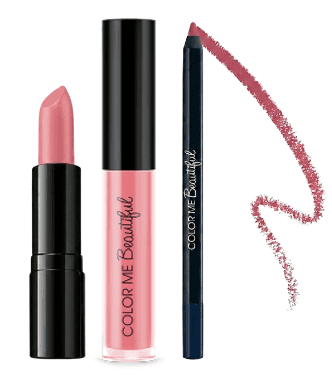
This translates to a different approach to cosmetics. Unlike conventional beauty brands, which organize offerings by trend or category, Color Me Beautiful structures its entire portfolio around the four-season system. Foundations, lipsticks, blushes, and even skincare are aligned with undertone, depth, and contrast, ensuring that every product integrates seamlessly into a user’s broader palette.
“Most beauty brands ask you to adapt to the product,” DiAntonio notes. “We’ve built a system where the product adapts to you.”
That philosophy extends into its business model. The company has cultivated a global network of certified consultants, enabling a hybrid of digital and human-led experiences. Clients can take a quick online quiz and receive an AI-generated color profile. They can also deepen their understanding through one-on-one consultations. This approach reflects a broader shift in the beauty industry toward personalization at scale, where technology enhances and goes hand-in-hand with expert guidance.
Equally strategic is the brand’s investment in education. Through Color Me University, the company reframes beauty as a skill set rather than a series of purchases. Tutorials, guides, and content-driven learning modules teach users how to interpret their own features, creating a more informed and self-sufficient customer.
“Education is the bridge between inspiration and action,” DiAntonio says. “When someone understands why a color works, they don’t just follow advice, they own it.”
This focus on empowerment has also influenced the company’s expansion strategy. In recent years, Color Me Beautiful has scaled internationally, extending its reach while maintaining consistency in its core methodology. The result is a brand that feels both global and personal, standardized in its framework, yet tailored in its application.
In an industry often driven by rapid cycles and ephemeral trends, Color Me Beautiful offers a counterpoint: a system rooted in permanence. Its continued relevance lies not in reinvention, but in refinement, adapting its delivery while preserving its foundational logic.
“Trends will always change,” DiAntonio reflects. “But the relationship between color and the individual, that’s timeless.”
