
GRIT Obstacle Training
For years, Kurt Sabin, owner of GRIT Obstacle Training, viewed fitness through a lens that many adults recognize, where physical appearance was often treated as the primary measure of athletic ability. That perspective shifted after he entered a Spartan obstacle course race in 2018 and found himself struggling through challenges he believed he had trained for. Despite years of consistent workouts, Sabin left the event questioning whether conventional fitness routines were truly preparing people for the physical demands of real-world movement and resilience.
According to Sabin, the disconnect came from realizing that looking athletic and moving athletically are often two very different things. He explains that traditional gym routines frequently emphasize isolated muscle groups while overlooking balance, endurance, coordination, mobility, and movement efficiency. That realization later became the foundation of GRIT Obstacle Training, a Michigan-based training facility focused on obstacle-style and functional fitness programs for both adults and children. Sabin says many adults begin fitness routines with consistency but eventually plateau because the workouts start to feel repetitive. From his perspective, many people spend hours training individual muscle groups while still struggling with movements that require full-body athleticism. He recalls switching from six traditional gym sessions per week to three days of full-body athletic training and noticing significant improvements in endurance, strength, mobility, and overall conditioning within months.

GRIT Obstacle Training
Public health experts increasingly emphasize movement quality alongside strength and cardiovascular health. Current recommendations encourage adults to complete at least 150 minutes of moderate-intensity physical activity each week, along with muscle-strengthening activities on two or more days. Regular physical activity also supports long-term health and mobility as people age.
Sabin believes obstacle-style training naturally combines many of those elements at once. Instead of focusing only on appearance, he says the workouts are designed to improve agility, grip strength, endurance, coordination, and help reduce the risk of injury. Research has found that declining handgrip strength is associated with aging and reduced long-term physical resilience.
“I realized that I can do so much more with so much less time if I train this other way,” Sabin says. “It completely changed how I looked at fitness and what being healthy actually meant.”
Research on functional fitness and aging has grown in recent years. Studies suggest that exercise can improve functional fitness and independence in adults over 40 while supporting balance, mobility, and everyday movement. Sabin notes that many of his clients are not training for races. Instead, they are focused on maintaining energy, preventing injuries, and staying active as they age.
According to Sabin, challenge-based training also changes the way many adults approach exercise. At GRIT, members often work toward specific goals such as completing their first pull-up, climbing obstacles, or passing athletic fitness tests. He says people tend to stay more engaged when they are working toward a clear goal instead of simply repeating the same workouts.
Community also plays a major role in long-term consistency. Sabin says accountability becomes more meaningful when it comes from fellow members rather than only from a coach. He believes an encouraging environment built around shared progress helps people stay committed over time.
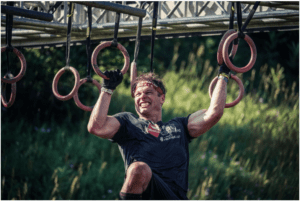
Kurt Sabin
From his perspective, one of the biggest mistakes adults make is focusing only on appearance while overlooking movement quality and athleticism. “It is important to train the entire body to move efficiently before focusing on how much weight can be lifted,” Sabin says. He believes functional movement carries over into everyday life through activities such as carrying children, gardening, traveling, climbing stairs, or simply maintaining independence later in life.
Sabin opened GRIT shortly before the pandemic and gradually expanded the business into a coaching-focused model centered on accountability and long-term progress. Over time, he adapted the programming to welcome adults of all fitness levels, including older clients who may never tackle a formal obstacle course but still benefit from circuit-based athletic training.
“The future of fitness is going to revolve around capability and longevity,” Sabin says. “People want to feel strong, resilient, confident, and prepared for real life, and fitness has to support that in a practical way.”
