
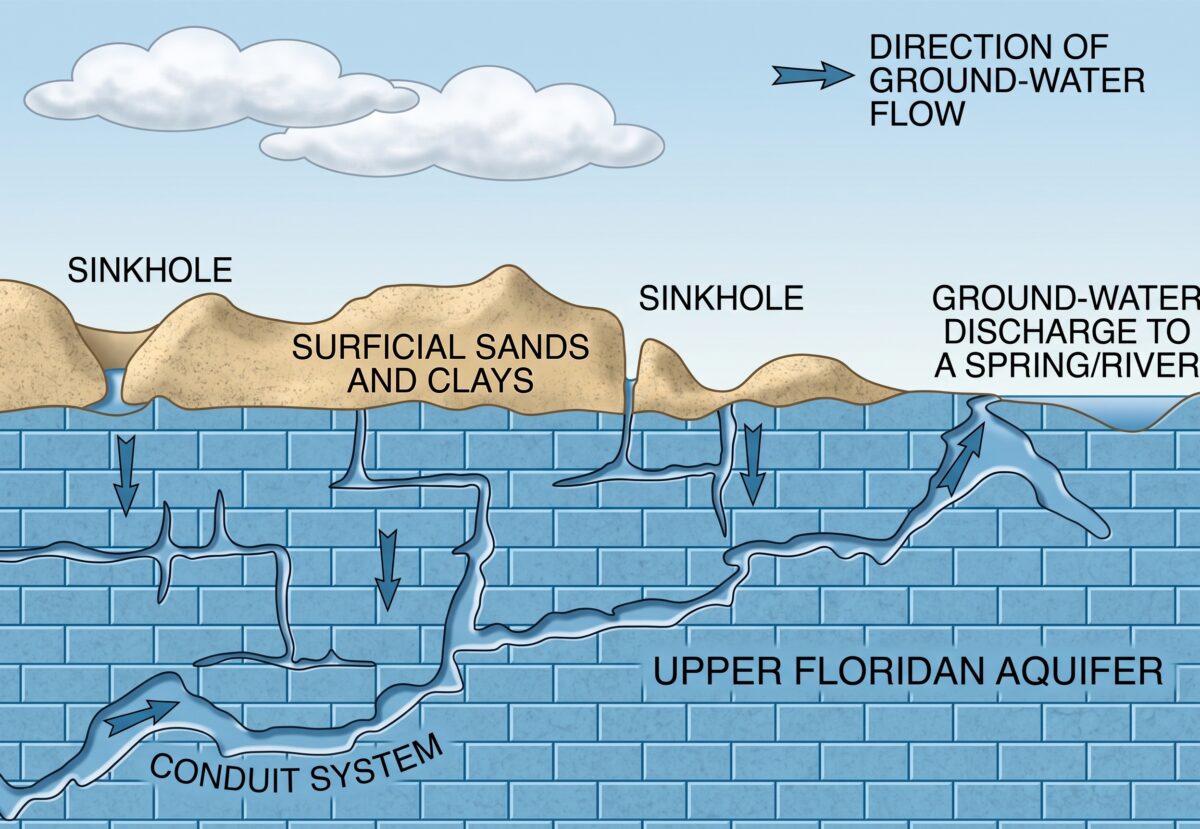
Florida’s relationship with water is inseparable from the land beneath it. Wetlands, marshes, floodplains, groundwater recharge areas, and the state’s extensive karst geology all influence how water moves through the environment. For Mitch Allen and WeCan, understanding and protecting those natural systems should be part of any serious conversation about development, public safety, and water protection.
Allen’s interest in these issues comes from years of studying Florida’s karst landscape, documenting sinkhole activity, reviewing public records, and examining the way development and environmental decisions can affect the movement and quality of water.
His concerns extend beyond environmental preservation. Allen believes the public deserves access to information that could materially affect decisions about where people live, what they purchase, and how communities manage land and water.
One of the questions at the center of his work involves Florida’s wetlands, marshes, floodplains, and groundwater recharge areas. These areas can serve important natural functions by absorbing and filtering water and allowing rainfall to move into underlying groundwater systems.
When these areas are filled, altered, or developed, Allen argues that the consequences should be considered beyond the immediate construction project. Changes to natural drainage and groundwater movement can affect the broader environment, particularly in a state whose geology creates unique challenges.
Florida is known for its karst terrain, where soluble rock formations can contribute to the development of sinkholes and other ground features. Allen has focused particular attention on the Lake Wales Ridge area, which he says presents significant concerns because of its geology and history of sinkhole activity.
He points to closed-end basins and other landscape features as areas deserving closer examination. Allen references the Killam report in his research and argues that understanding the geological history of these areas is important when decisions are made about development and land use.
For Allen, the issue is not simply whether a piece of property can technically be developed. It is whether prospective homeowners and members of the public have access to the information they need to understand the characteristics and potential risks associated with that property.
That concern is particularly important when purchasing a home, often one of the largest financial investments an individual or family will make.
Allen questions whether consumers are receiving sufficient information about factors such as FEMA-designated flood hazard areas, sinkhole-prone locations, groundwater conditions, and other characteristics that could affect a property’s risks, insurance requirements, or long-term suitability.
He also points to Florida’s real estate disclosure requirements as an important part of that discussion. In his view, known facts that could materially affect a buyer’s decision should not be hidden behind technical terminology or difficult-to-access public records.
The issue becomes even more complicated when insurance is considered. Homeowners may encounter separate coverage considerations involving sinkholes, ground movement, flooding, wind, hurricanes, and other risks. Allen believes that understanding the underlying characteristics of a property should be part of the decision-making process before someone commits to purchasing it.
His concerns also extend to the use and release of chemicals.
Allen has spent years examining questions surrounding pesticides, fertilizers, and other substances that can enter the environment. Safety Data Sheets for chemical products can contain warnings concerning environmental releases, waterways, containment, and disposal. For Allen, those warnings raise a broader question: how should communities protect natural water systems when chemicals are deliberately or inadvertently introduced into areas connected to groundwater and surface water?
He points to public materials from Polk County that discuss the environmental consequences of fertilizer and pesticide runoff, including impacts on water quality, vegetation, and wildlife.
At the same time, Allen questions how permits governing the use or discharge of certain substances are evaluated when those activities occur near or within areas connected to drinking-water sources.
These are questions he believes deserve greater public scrutiny and transparency.
Allen is not approaching the subject solely from a theoretical perspective. He has spent years collecting photographs, records, documents, and other information related to Florida’s karst geology, sinkholes, water movement, development, and environmental practices.
That documentation has also shaped his broader concerns about how public agencies and officials communicate information to residents.
Allen says he has encountered situations in which written rules, codes, ordinances, contracts, and stated public responsibilities appear to raise questions about how decisions are ultimately carried out. Rather than treating each issue as one large story, he believes these matters should be examined individually, with the relevant documentation and circumstances considered on their own merits.
That distinction matters because the issues involved are complex. Questions about land development, water management, environmental permitting, public disclosure, and real estate law can involve different agencies, regulations, jurisdictions, and technical considerations.
Allen’s objective through WeCan is to encourage people to look more closely at those connections.
He believes the public should be able to ask basic questions about the land beneath their homes, the water moving through their communities, and the environmental decisions that may affect both.
Would a prospective homeowner want to know if a property sits within a FEMA National Flood Hazard Area? Would they want to know if the surrounding geology presents a heightened concern regarding sinkholes? Would they want to understand what environmental permits apply to nearby activities or what natural systems have been altered during development?
For Allen, these are not abstract questions. They are questions about public knowledge, personal investment, environmental protection, and the responsibilities that come with making decisions that can affect communities for decades.
His broader argument is that nature should not be viewed simply as undeveloped space waiting for another use.
Wetlands can store and filter water. Floodplains can influence how water moves during major rainfall events. Groundwater recharge areas can play a role in replenishing underground water systems. In a state shaped by karst geology, these natural processes can have consequences far beyond the boundaries of an individual development.
Allen believes development decisions should therefore account for the functions these landscapes perform before they are altered.
The same principle applies to water contamination. Rather than focusing exclusively on how to manage pollutants after they enter the environment, Allen argues for greater attention to preventing contamination and protecting the natural systems that can help maintain water quality.
His work ultimately comes back to transparency.
Allen believes people should have access to the known information necessary to make informed decisions about their homes, communities, health, safety, and environment. He sees public records, scientific information, photographs, regulatory documents, and firsthand observations as pieces of a larger picture.
Through WeCan, he hopes to bring those pieces together and encourage a broader conversation about Florida’s land and water.
The issues Allen raises are complex and involve environmental science, geology, development, regulation, real estate, insurance, and public policy. They cannot necessarily be reduced to a single solution.
But Allen believes asking difficult questions is an important starting point.
For him, protecting Florida’s water means looking not only at the water itself, but also at the natural systems through which it moves. It means understanding the geology beneath communities, recognizing the role of wetlands and recharge areas, examining how development changes natural processes, and ensuring that members of the public have meaningful access to relevant information.
Mitch Allen
[email protected]
