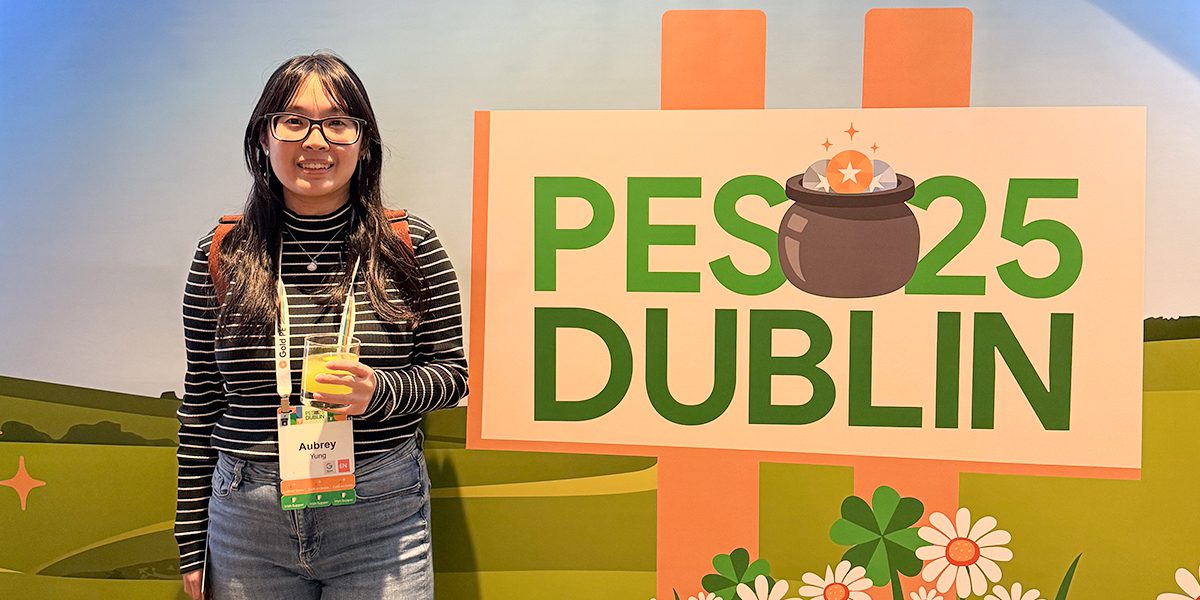
Aubrey Yung is an SEO Manager and Schema Markup Consultant with experience spanning FinTech, SaaS, healthcare, travel, e-commerce, and other industries. She is also a Google Search Central Gold Product Expert and a certified Product Marketer. Her current work explores areas such as entity SEO, AI visibility, knowledge graphs, SERP analysis, and schema markup. Her academic background in Sociology and Comparative Literature influences how she studies search. She looks at people, language, context, business goals, and technical systems together. In this interview, she discusses how she investigates complex SEO problems, adapts her methodology across industries, evaluates AI search, and thinks about the future of search systems.
Aubrey, your path from studying Sociology and Comparative Literature to working in SEO has crossed several disciplines. How do you approach digital problems through both human behavior and technical systems, and how does it influence your methodology?
Aubrey Yung: I usually start by trying to understand two things: the person and the business. How does the business actually work? Who is its audience? What are those people trying to accomplish, and how does the business meet that need? I think you need that context before the technical data becomes truly meaningful.
My background in Sociology made me attentive to patterns and structures, but also cautious about what we infer from them. Correlation can show you that two things are happening together, but it doesn’t necessarily explain the motivation behind a behavior. I carry that mindset into SEO. I don’t want to see a movement in traffic or rankings and immediately assume I know why it happened. I want to understand the larger structure around it.
Comparative Literature influenced me in a different way, particularly in how I think about language and meaning. Wittgenstein is actually my favorite philosopher, and I often come back to his idea of the “language-game,” that meaning depends on how language is used within a particular context. I think there is an interesting parallel with search. The same query, term, or entity can mean different things depending on the user, the context, and the system interpreting it.
That’s also why I don’t see SEO as purely a technical discipline. SEO keeps evolving because search itself keeps evolving. We are constantly trying to understand the framework and the rules through which search systems interpret information, but those rules aren’t operating independently of people. Search engines are continually adapting to how people search and how they express their needs.
So, for me, the ultimate objective isn’t to game an algorithm. Algorithms will change. The more durable problem is understanding the user’s need and figuring out how the business can answer it. The technical work is the mechanism that helps make that relationship legible to search systems.
When you first encounter a complex SEO turnaround, how do you determine what the actual problem is before deciding what should be changed, and what signals tell you that a commonly assumed diagnosis is wrong?
Aubrey Yung: When I first encounter a complex SEO turnaround, I try not to begin with a diagnosis. I begin by understanding the website.
A technical crawl is usually my starting point because it gives me a way to understand the site’s architecture, its technical foundation, and the content that actually exists. When you crawl a site carefully, you start building a mental model of how it works: how pages are organized, how different sections relate to one another, what search engines can access, and where there may be inconsistencies or structural problems.
From there, traffic and conversion data naturally become part of the investigation. I don’t really see the technical audit and performance analysis as separate exercises. What I find during the crawl gives me questions to ask of the traffic data, and what I see in the traffic data tells me where I should look more closely in the site.
Timing is also very important. I like to maintain a log of meaningful changes to the website and compare those against when performance started to decline. But timing alone doesn’t establish causation, so I also look at the pattern of the drop. Was it sudden or gradual? Sitewide or isolated to a particular directory, template, page type, or group of queries? The shape of the decline can tell you a lot about where to investigate next.
My process isn’t an overly formal hypothesis framework. It is more iterative. You develop an understanding of the site, notice patterns, follow the evidence, and continually revise your interpretation as you uncover more information.
That is also why I am cautious when a problem arrives with a diagnosis already attached to it, whether that’s an algorithm update, a technical issue, or something else. Those explanations can be correct, but I don’t want them to determine the investigation. The objective is to reconstruct what actually happened from the site and the data, rather than make the evidence fit the initial assumption.
Q3. You have worked across FinTech, SaaS, healthcare, travel, e-commerce, and other sectors. How do you adapt your methodology when entering an unfamiliar industry? How do you separate patterns that can be applied broadly from assumptions that need to be rebuilt for each client?
Aubrey Yung: When I enter an unfamiliar industry, I usually start with the customer and the business model. I want to understand what the business offers, who the customer is, and what has to happen before that customer converts. Once you understand those things, you often start uncovering the search behavior naturally, as well as industry-specific constraints such as regulation.
There are parts of SEO that transfer quite well between industries. The technical principles and fundamentals don’t suddenly change because you move from SaaS to healthcare or from FinTech to travel. A search engine still needs to crawl, understand, and evaluate the information on a website.
What I am much more careful about transferring are assumptions about user experience and conversion. How people make decisions can be drastically different between industries. The information someone needs before choosing a healthcare provider is not necessarily the same as what they need before buying a product or evaluating a SaaS platform. The length of the journey can be different, the friction points can be different, and the signals that create trust can be different.
So when I’m learning a new industry, I spend a lot of time with the material that already exists around the customer. I read the site’s existing content, but if customer calls or similar qualitative data are available, those can be particularly useful. I also look at where the users themselves are and how they talk about the problem.
Ultimately, I’m trying to reconstruct the user journey: How does someone go from recognizing a need to searching for an answer and eventually converting? How long does that process take? Where do they hesitate? What information do they need to move forward?
That is where I separate what is transferable from what needs to be rebuilt. I can bring the technical principles and an investigative framework with me, but I don’t want to bring a predetermined model of the customer. That has to be learned again for each business.
Your recent work examines AI visibility, entity recognition, knowledge graphs, and the ways search systems interpret information beyond traditional keyword rankings. How has the rise of AI-generated search and answer engines changed the way you evaluate the success of an SEO strategy, and which measurements do you believe practitioners should pay more attention to?
Aubrey Yung: I don’t think rankings and organic traffic are becoming irrelevant. I think the definition of both is expanding.
Traditionally, we think about ranking as occupying a position on a SERP and organic acquisition as someone clicking that result and landing on a website. With LLMs and answer engines, you can still be ranked in a sense; the system is deciding which brands, sources, or entities are relevant enough to mention, cite, or recommend. The difference is that the user may never arrive on your website.
That makes measurement more difficult, but I don’t think it necessarily makes the visibility less valuable. If someone asks an AI system for a recommendation and your brand consistently appears in that conversation, that is a form of organic discovery. If that exposure makes the brand memorable and eventually contributes to a conversion, I would consider it part of organic acquisition, even if our traditional analytics cannot neatly attribute it.
For that reason, my definition of AI visibility is quite broad. I’m interested in whether a brand is mentioned and cited, but also whether the model understands the entity correctly, which topics and questions it associates the brand with, how it describes the brand, and how consistently those associations appear.
Entity recognition and knowledge graphs are especially interesting to me because they connect back to my academic interest in language and meaning. I’m fascinated by how an LLM interprets a term or an entity, and particularly by how that interpretation can differ across languages and across models. In some ways, the question is no longer only, “Can this page rank for this keyword?” but also, “What does this system understand this entity to mean, and what does it associate it with?”
In terms of measurement, I pay attention to LLM mentions and citations, share of voice, and ultimately conversions. But I don’t think the industry has a completely reliable measurement framework yet. I’m particularly cautious about treating prompt tracking as equivalent to traditional rank tracking. A predefined set of prompts can create an artificial search environment that may not represent how real users interact with these systems.
That doesn’t mean prompt-level data isn’t useful. I think it is important to study it and understand what it can tell us; I just don’t want to give it more certainty than it deserves. Right now, part of working with AI visibility is accepting that systems are evolving faster than our measurement methods and being precise about what the data can and cannot tell us.
Precision is central to your work, but complex SEO projects rarely unfold exactly as planned. Can you discuss a situation where the data forced you to abandon, significantly revise, or rethink an initial recommendation?
Aubrey Yung: One example that stayed with me involved content freshness and publication dates.
I had noticed that some competitors outranking us had visible byline dates in the SERP. My initial hypothesis was fairly straightforward: if we displayed publication dates more prominently, Google might surface those dates in search results, and the additional freshness signal could potentially improve visibility and click-through rate.
We implemented the change across the site, and part of the hypothesis was correct. Google did begin displaying the byline dates. But the performance data told a very different story from what I expected.
Within a week, organic traffic dropped by around 13%. What was particularly interesting was that rankings had remained relatively stable. That made me question whether this was really a ranking problem at all. A large portion of the content was evergreen, and some articles had originally been published more than two years earlier. By making those dates prominent, we may actually have made useful content appear outdated to users.
We rolled the change back, and clicks recovered by roughly 10% the following week.
It was a useful reminder that an implementation can work exactly as intended technically and still produce the wrong outcome. We successfully influenced how the result appeared in the SERP, but that didn’t mean users would respond to it in the way I had assumed.
Experiences like that are why I try not to become too attached to an initial recommendation. Precision, to me, isn’t about getting every hypothesis right the first time. It’s about being precise enough in your measurement to recognize when you’re wrong, understand why, and change direction quickly. It also reinforced something I now consider very important: test changes where possible before rolling them out broadly, and keep monitoring what happens afterward.
And lastly, what kinds of problems do you want to solve next, and what would you like your methodology to become as search moves from a system of ranked pages toward a broader ecosystem of AI agents, entities, and interactive digital experiences?
Aubrey Yung: I’m particularly interested in multilingual differences and how different models construct an understanding of the same entity or topic across languages.
LLMs learn patterns and relationships from language, which makes me particularly curious about what happens when those patterns differ significantly between languages. Grammar and linguistic structure can be very different, but so can context, cultural associations, and the ways people express the same underlying idea. I want to understand how those differences affect the way a model represents and responds to the same topic or entity across languages. Does it arrive at something resembling a consistent understanding, or does that “understanding” shift depending on the linguistic and cultural patterns available to it?
I don’t think that’s a question SEO practitioners can necessarily answer from the outside, but we can experiment with how these systems behave. That’s the direction I’d like more of my work to take: more experimentation and original research rather than simply adopting whatever framework becomes conventional for AI search.
As search moves toward AI agents and interactive experiences, I also think the scope of SEO becomes broader. The challenge may increasingly be less about optimizing a page for a particular ranking position and more about making a business, its products, its expertise, and the relationships between those things understandable and discoverable across different machine systems.
For me, being correctly understood is particularly important. Before asking whether an AI system recommends a brand, I want to know whether it has actually formed the right representation of what that brand is, what it does, and where it is relevant.
At the same time, I don’t think the fundamentals of my methodology need to change completely. I would still start with the person, the business, and then the system connecting them. What changes is the system. Previously, we were primarily trying to understand how a search engine crawled, indexed, and ranked pages. Now we also have to investigate how different models interpret entities, retrieve information, construct answers, and potentially act on behalf of users.
I’d like my methodology to evolve with that complexity while remaining empirical: experiment, observe how these systems behave, question what the measurements actually mean, and revise the framework when the evidence tells us to.
Conclusion
Aubrey Yung’s SEO work is extending into AI visibility, entity recognition, multilingual search, and knowledge graphs. She sees these areas as part of a broader change in how people discover information online. Search is expanding beyond ranked pages and traditional clicks. AI systems are creating new ways for users to find brands, information, and recommendations. Hence, the next stage for Yung is continued experimentation and studying how different AI systems understand entities across languages and contexts.
Connect with Aubrey Yung on LinkedIn to learn more.