
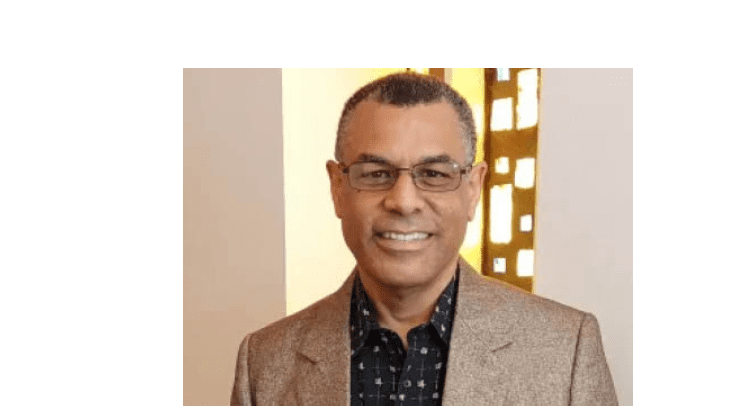
Dr. Tony Hart’s story begins long before he assumed leadership. As a third-generation preacher, he inherited a foundation shaped by conviction, service, and a sense of responsibility that extended beyond individual ambition. His grandfather served as a missionary in Jamaica, establishing early ties between faith and global outreach. His father expanded that influence through radio, building a platform that carried the message of faith into homes and communities at scale. Long before Hart stepped into formal leadership, he had witnessed how belief could be communicated, modeled, and sustained across generations.
According to Hart, President of GOGF Ministries, this legacy shaped both his worldview and his approach to leadership. Faith was never presented to him as a theory. It was practiced, visible, and accountable. “I come from a line of men who did not just talk about faith. They carried it into communities, built with it, and stood on it when it mattered,” Hart reflects. “That legacy set the standard for what leadership should look like.”
Hart formally stepped into that legacy in 1998 when he became full-time president of the ministry. His leadership credentials deepened further through his longstanding involvement with the National Religious Broadcasters, where he has served on the board for over a decade and now holds the position of vice chairman. These roles established his credibility within both ministry and media, placing him at the intersection of faith, communication, and leadership development.
Yet the defining shift in Hart’s journey came not in a boardroom or broadcast studio, but under a tree in Uganda. While teaching and training at a conference in 1997, Hart stepped outside during a break to escape the heat. What followed became a moment of lasting clarity.
“A local pastor came to thank us, and he spoke about the story of Joseph and how God can take difficult beginnings and turn them into something that serves others. That conversation stayed with me long after I left. On the flight home, I kept returning to one idea. Black Americans may not come to the US from perfect circumstances, but we are given opportunities. And with that opportunity comes responsibility. If we have access to training, education, and resources, then we are accountable for extending that to those who do not,” he recalls.

That reflection evolved into a deeper realization about privilege, opportunity, and responsibility. Hart began to see leadership development as a force capable of creating long-term impact across underserved regions. “Opportunity is not meant to be contained,” he explains. “If you have been given access, education, and a platform, then you carry a responsibility to extend that to those who have not. Leadership is how you do that in a way that lasts.”
This moment led to a strategic shift in the organization’s mission, defined through what he calls the three P’s: planting churches, preparing leaders, and proclaiming the gospel. The emphasis on preparing leaders quickly became central. Since 1998, Hart has led multiple mission trips each year across Africa, India, the Caribbean, and parts of South America.
These journeys, he notes, have exposed him to both adversity and resilience on a deeper scale. “I have seen people travel for days with no guarantee of comfort or convenience, simply to sit in a room and learn,” he says. “That level of commitment forces you to rethink what you consider sacrifice. It shows you exactly how much value they place on growth.”
For Hart, these experiences reinforced a powerful truth about perseverance. Communities facing limited resources continued to show up with discipline and purpose. “They do not wait for ideal conditions,” he adds. “They show up because they understand that transformation requires commitment, regardless of circumstance.”
At the same time, Hart recognizes that faith leadership operates within a rapidly changing global context. He observes a growing skepticism toward institutional religion, influenced in part by increasing reliance on scientific frameworks. “Science has earned trust because it delivers answers,” he notes. “But it does not answer the questions that define purpose, meaning, or how we should live. Those are the questions people are still searching for.”
He believes that this shift has contributed to a broader erosion of trust, where individuals place confidence in systems while losing connection with spiritual foundations. “People begin to assume that science can answer all the questions, and that everything becomes explainable,” he says. “That creates distance from the idea that there is a higher authority or a guiding truth beyond ourselves.”
According to Hart, globalization has further complicated this landscape. Increased travel and cultural exchange have introduced a wide spectrum of beliefs into shared spaces, often leading to uncertainty about truth itself. “We are living in a time where every belief sits side by side,” Hart explains. “The result is not always clarity. In many cases, it creates confusion about what is true and what is simply accepted.”
In his view, this environment demands leaders who bring clarity, conviction, and a grounded sense of purpose. His response centers on a return to teaching and demonstration. Hart places strong emphasis on grounding leadership in scripture and lived example. “People are not looking for louder voices,” he says. “They are looking for consistent lives. When belief is demonstrated with discipline and integrity, it carries far more weight than words alone.”
This philosophy shapes how he trains pastors and leaders, encouraging them to focus on core teachings and consistent practice. “Our responsibility is to stay anchored in what is true,” he adds. “When leaders drift into personal preference or opinion, they create confusion. When they stay rooted in scripture, they create clarity.”
Underlying this approach is a broader vision for legacy. Hart does not position his work as an effort to impose belief, but as an invitation for individuals to reconnect with purpose and identity. Through GOGF Ministries’ initiatives, such as children’s homes in Jamaica and India, alongside donations “from those who care enough to stand with GOGF”, he has witnessed the long-term impact of this work, including individuals who have grown into leadership roles themselves.
For Hart, the measure of success lies in transformations that endure across generations. His journey reflects a continuous thread that connects heritage, responsibility, and action. It is a model of leadership shaped by conviction and sustained through service.
“Real faith is measured in what you build, who you lift, and how you live when no one is watching,” he says. “If it does not translate into action, then it was never fully understood.”
