
Political argument has become one of the defining languages of public life, yet its grammar is increasingly familiar. Positions are announced, sides are chosen, and complex social questions are compressed into conclusions that leave little room for uncertainty. A June 2026 Pew Research Center political typology found nine distinct groups within the American electorate, underscoring how much political identity now extends beyond a simple left-right divide.
The pressure reaches culture, too. Artists working with social questions enter an environment in which audiences may arrive expecting confirmation of what they already believe. A work can become a statement before it has had the chance to become an experience. The danger can be particularly acute for art dealing with injustice, inequality, or political division, where the desire to communicate an urgent message can overwhelm the harder task of making people think.
There is another possibility. Art can refuse to hand an audience a finished answer and instead construct an encounter with a question that remains uncomfortable after the curtain falls. Its power can lie in the space between what an artist intends to communicate and what an audience is forced to confront for itself.
That idea carries particular weight at a moment when 64% of Americans identified the ability of Democrats and Republicans to work together in Washington as a very big national problem in a 2026 Pew survey. The figures capture a political fracture, but they also point toward a cultural problem: how can art engage a divided public without becoming another instrument of division?
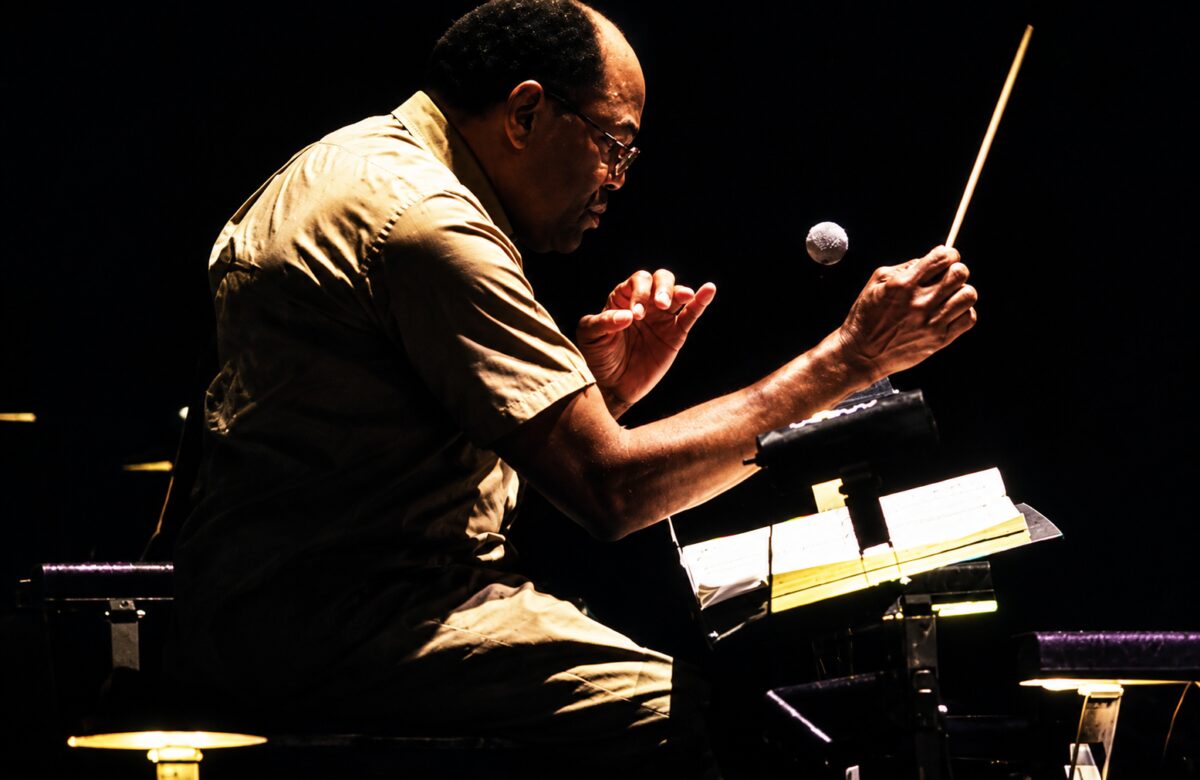
Milton Williams has spent more than six decades working inside that question. His career across composition, theatre, and education has led him toward a form of socially engaged art built around intellectual and emotional participation. The philosophy took shape at the University of California, Berkeley, in 1968, where Williams directed 125 students across eight vocal ensembles with different musical backgrounds. He recalls arriving at a moment marked by major assassinations and a growing struggle for social equality, particularly within Black communities and among people with limited power to fight back.
“I was so emotionally taken by all of these situations happening at one time,” Williams recalls. His response was to create work that could “spur thinking” and draw performers and audiences into the same thought process. The objective, as he frames it, was not to write about a crisis from a safe distance. It was to confront the audience with it and ask, “What can you do about it?”
That question became part of the foundation for A Bridge To The Promised Land: 1968, the major theatrical work Williams has continued developing across decades. The organization behind the project identifies Williams as its Producing Artistic Director and describes the work as addressing social issues including justice, homelessness in inner cities, and political inequality.
The path toward the current work was hardly straightforward. In 1981, a San Francisco production of an earlier version, then titled Transfigured Blues, was planned with the possibility of a subsequent Kennedy Center presentation. According to him, funding problems at the San Francisco Arts Council ultimately brought the production to a halt. Williams remembers the setback as deeply distressing, but it also pushed him back into the work.
He continued revising the music until he reached what he considered a definitive understanding of all 25 movements. The project has since expanded into a theatrical book written with Ananda Bena-Weber. The organization currently credits the book to Williams and Bena-Weber.
According to Williams, the audience’s role remains intentionally open. He does not want the work to manufacture a political movement or dictate a prescribed response. “Each person in the audience should take the experience and do with it what they do best,” he explains. “Each individual has a voice, and they need to use that voice as they’re able, as they’re capable.”
That position also defines the boundary Williams draws around his own authority. Asked about the responsibility of artists during periods of intense social division, he resists speaking on behalf of the profession as a whole. “I don’t have the capability of addressing that for other artists,” he responds. “I can only express how I feel.”
There is an important discipline in that answer. Williams does not claim to have discovered a universal formula for socially conscious art. His work reflects a more difficult proposition: that an artist can confront a society with its most unsettled questions without deciding the answer on its behalf.
At a time when public debate increasingly rewards certainty, art has the unusual freedom to leave something unresolved. A theatre audience cannot vote its way out of a difficult scene or scroll past an uncomfortable question once it has been placed in the room. It has to sit with it. Williams has spent decades building his work around that tension, trusting the audience enough to let the meaning continue after the performance ends.
Perhaps that is where socially engaged art has its greatest political value. It does not need to tell a divided society what to believe. It needs to make looking away harder.
