
Aging does not follow the same script for everyone. Two people can reach the same decade of life with very different levels of energy, mobility, metabolic health, and day-to-day function. Recent research is increasingly examining that variation. A 2026 review led by Mayo Clinic researchers notes that chronological age alone does not capture differences in individual health and describes biological aging as involving multiple molecular systems.
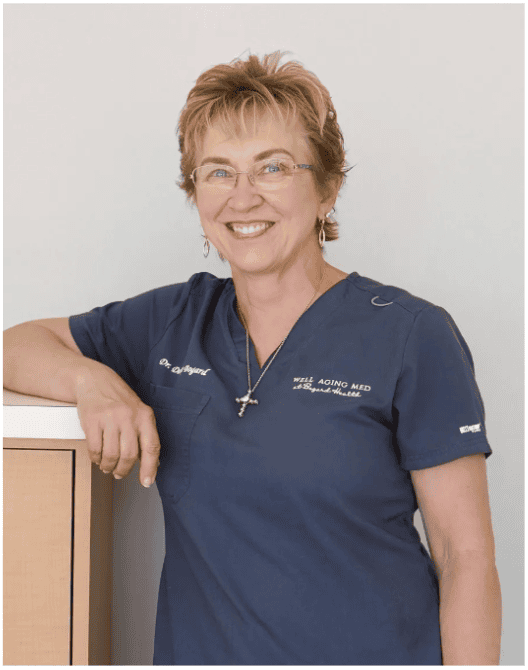
For Denise Bogard, M.D., founder of Well Aging Med, that complexity is central to how healthcare should approach aging. She frames health as a network involving thyroid function, hormone levels, adrenal function, inflammation, blood sugar, cardiovascular health, genetics, lifestyle, and other factors that may interact differently in each person. Her goal, she says, is to help patients improve the trajectory of their health as they grow older.
“I tell people that I may not help them live longer, but hopefully the quality of the years they have can be better, my goal for my patients is to live a full, active life into their 90s, avoiding assisted living,” Bogard says. “That emphasis on function aligns with a broader understanding of healthy aging, where maintaining physical and cognitive capacity can matter alongside managing disease.”
Bogard’s perspective was shaped partly by becoming a patient herself. After years working as an anesthesiologist while raising three children, she recalls reaching her early 50s exhausted and gaining 20 pounds within six months. She felt something had changed, even though an initial thyroid test did not provide the explanation she was seeking. That experience led her to pursue additional care and eventually further training in anti-aging and regenerative medicine.
Today, Well Aging Med is an integrative and functional medicine practice in Roseville, California. Its approach considers individual factors including hormone balance, gut health, stress and inflammation, with services spanning areas such as weight management, hormone balance, supplements, peptides, stem cells, ozone, IV therapy and specialty testing. Bogard compares the body to a “giant spider web,” because changes in one area may coincide with changes elsewhere.
That interconnected view may be especially relevant to women approaching midlife. A recent review of women’s health across the menopausal transition explains changes spanning cardiometabolic, musculoskeletal, sleep, mood, and cognitive domains, while emphasizing that much of the evidence identifies associations rather than proving that menopause itself independently accelerates aging. The authors advocate individualized care and shared decision-making rather than treating menopause as a single isolated event.
Bogard similarly argues that women’s health conversations can begin before menopause itself. “Hormonal and reproductive changes unfold over time, and symptoms and health risks vary considerably among individuals,” Bogard says. “This variability reinforces the importance of understanding the particular person experiencing a problem before determining what approach may be appropriate.”
Personalization is particularly important when menopausal hormone therapy is being considered. A 2024 International Menopause Society White Paper emphasizes an individualized approach to prescribing, including consideration of who may be an appropriate candidate, the type and dose of therapy, and when treatment should begin or end. These decisions require careful consideration of each woman’s circumstances rather than a universal approach. Treatment decisions should be made with a qualified healthcare professional after considering individual health needs and potential benefits and risks.
Bogard’s broader message extends beyond any individual treatment. After experiencing and beating stage-four cancer herself, she says being both physician and patient strengthened her belief that people should participate actively in their healthcare decisions, ask questions, and seek appropriate information about their options.
“You have to be your own advocate,” Bogard says. “For an aging population, that may begin with recognizing a simple reality. Growing older is universal, but the health journey that accompanies it remains deeply individual.”
