
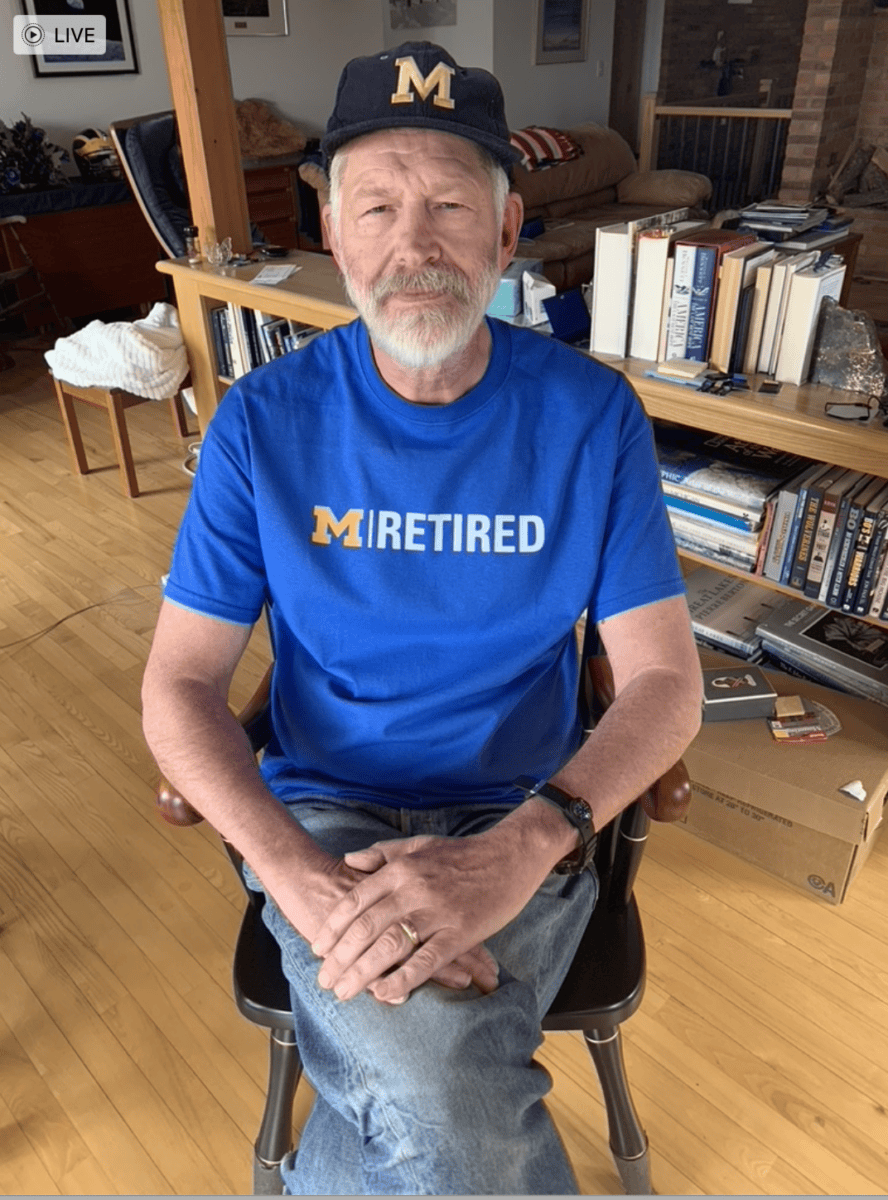
Medicine has always progressed through scientific breakthroughs, emerging technologies, and new methods of caring for patients. Dr. Robert W. Ike, a retired rheumatologist, welcomes those advances, including the rapid development of artificial intelligence. Still, he believes the profession’s greatest value lies in something technology is meant to enhance rather than replace: a physician’s ability to understand a patient’s story through careful listening, thoughtful analysis, and clinical judgment. As he often reminds others, “Listen long enough and the patient will tell you what’s wrong.” That principle has shaped both his distinguished medical career and his work as an author.
Over more than 40 years in healthcare, Dr. Ike witnessed medicine transform in remarkable ways. He served as a physician, educator, and Emeritus Associate Professor of Internal Medicine at the University of Michigan, where he also contributed to advancing rheumatology by helping introduce arthroscopy and other minimally invasive procedures. Beyond performing these techniques, he trained physicians through academic courses and educational programs. Since retiring, Dr. Ike has continued to write books, essays, and medical commentary while serving as co CEO of Docere alongside his wife, bringing the same spirit of curiosity from his years in clinical practice into his writing.
Looking back, Dr. Ike says medicine was not part of a carefully planned career path. Instead, it gradually became the place where his interests naturally came together.
“Medicine wasn’t something I mapped out from the start. It came into focus only after I wandered through a handful of academic interests and realized that science was the one place where I could challenge myself intellectually while still building meaningful human connections,” he explains.
That unexpected beginning allowed him to experience medicine before computers became central to healthcare and later observe its transition into a profession increasingly influenced by digital systems and standardized clinical processes.
Those experiences have shaped the way he views artificial intelligence today. While much of the conversation focuses on what AI will eventually be capable of doing, Dr. Ike believes equal attention should be given to protecting the qualities that have always defined outstanding physicians. In his opinion, medicine has never been solely about collecting information.
“Physicians contribute by interpreting complexity, recognizing subtle patterns, weighing competing possibilities, and understanding circumstances that rarely fit neatly within predefined categories,” Dr. Ike says.
Years of caring for patients reinforced that belief. One particular case remains especially meaningful to him. A patient experiencing ongoing fever and pain had already undergone extensive testing without a clear diagnosis. During a routine conversation, Dr. Ike discovered the patient regularly worked with livestock. That single detail prompted him to investigate a rare infection that previous evaluations had overlooked, ultimately leading to the correct diagnosis and successful treatment. For Dr. Ike, the breakthrough came from listening rather than relying exclusively on test results.
“Medicine done right is really just developing stories. You take what a patient tells you and build a narrative that leads to a diagnosis and a treatment plan,” he says.
That same way of thinking continues to shape his life after clinical practice. His writing explores medicine, family, sports, music, food, and personal experiences, yet each subject reflects the same ability to recognize patterns and uncover meaning. In many respects, writing became another form of listening, allowing him to examine experiences from different perspectives while encouraging readers to do the same. Whether practicing medicine or writing essays, Dr. Ike believes both pursuits begin with understanding the stories people share.
His perspective also extends beyond artificial intelligence to the broader digital transformation taking place throughout healthcare. Electronic systems now influence nearly every aspect of medical practice, from documentation and diagnostics to scheduling and administrative workflows. Healthcare organizations continue investing heavily in digital innovation as they seek ways to improve efficiency while maintaining high quality patient care.
Despite these advancements, Dr. Ike believes the development of sound clinical judgment remains one of medicine’s greatest responsibilities. During his career, he watched protocols and standardized processes become increasingly common. Although these systems improve consistency, he believes every patient presents a unique situation that requires thoughtful interpretation rather than automatic decision making. Experience, he says, allows physicians to recognize when a patient’s circumstances fall outside established patterns.
He also believes critical thinking is strengthened through everyday habits. Before retiring in 2019, Dr. Ike saw electronic medical records significantly change how physicians documented patient care. He notes that writing has always helped doctors organize their thinking and sharpen their reasoning. Even with the introduction of voice recognition technology, physicians still needed to construct complete thoughts before speaking them aloud. Looking ahead, he hopes artificial intelligence will continue encouraging reflection rather than replacing the analytical process altogether.
“Think, but challenge,” he says. “Half of what medical students learn may be obsolete within five years. They must think for themselves and question what doesn’t seem right.”
For Dr. Ike, independent thinking is closely connected to professional satisfaction. He believes physicians experience the greatest fulfillment when they remain intellectually curious, embrace difficult diagnostic challenges, and build lasting relationships with their patients. The knowledge gained through years of education and experience becomes more valuable through continual use, and he believes excessive dependence on technology risks weakening those essential skills. Preserving thoughtful clinical judgment, he argues, ultimately serves both physicians and the patients who rely on them.
Many healthcare leaders share a similar outlook as artificial intelligence becomes more integrated into clinical care. Industry research continues to emphasize that successful AI adoption depends on responsible oversight, physician education, trust, and governance. Rather than replacing clinicians, these technologies are intended to strengthen their ability to deliver better care, an approach that closely reflects Dr. Ike’s long held belief that listening, curiosity, and sound judgment remain medicine’s most valuable assets.
As healthcare continues evolving, Dr. Ike believes its future will be strongest when innovation works alongside human expertise rather than attempting to replace it. By preserving the habits of careful listening, intellectual curiosity, and thoughtful interpretation, physicians can ensure that technological progress continues to enhance the deeply human qualities that have always been at the center of exceptional patient care.
